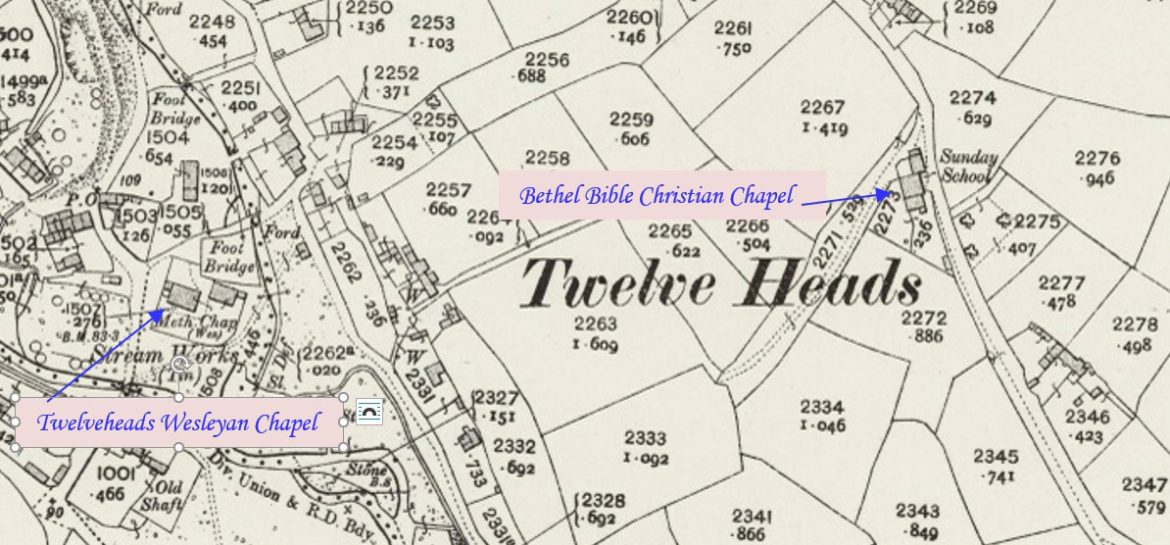
Twelveheads is a hamlet east of St Day in the parish of Chacewater between Truro and Redruth. The name comes from its mining history. Sets of stamps, machines for crushing ore, were once used on the dressing floors in the village. The stamps had a total of twelve ‘heads’. Billy Bray, the Methodist preacher, was…Continue Reading “Mapping Methodism – Twelveheads Wesleyan Chapel”
Greenbottom is a hamlet in the parish of Kenwyn in Cornwall on the Penstraze Moor between Saveock Water and Threemilestone, near the A390. It is situated south east of Penstraze. This profile of Greenbottom Wesleyan Chapel has been compiled by Tony Mansell. Build date unknown. Wesleyan wayside chapel, early C19, extended late C20 when…Continue Reading “Mapping Methodism – Greenbottom Wesleyan Chapel”
Sheffield is thought to have been established to house the workers of the Sheffield quarry and later the surrounding farms. The settlement was built along the road into Penzance where the stone had to be taken for shipment. After the 1830 Beer-house act, a kiddlywink, which is an old name for Cornish beer shop or…Continue Reading “Mapping Methodism – Sheffield Teetotal Wesleyan Chapel”
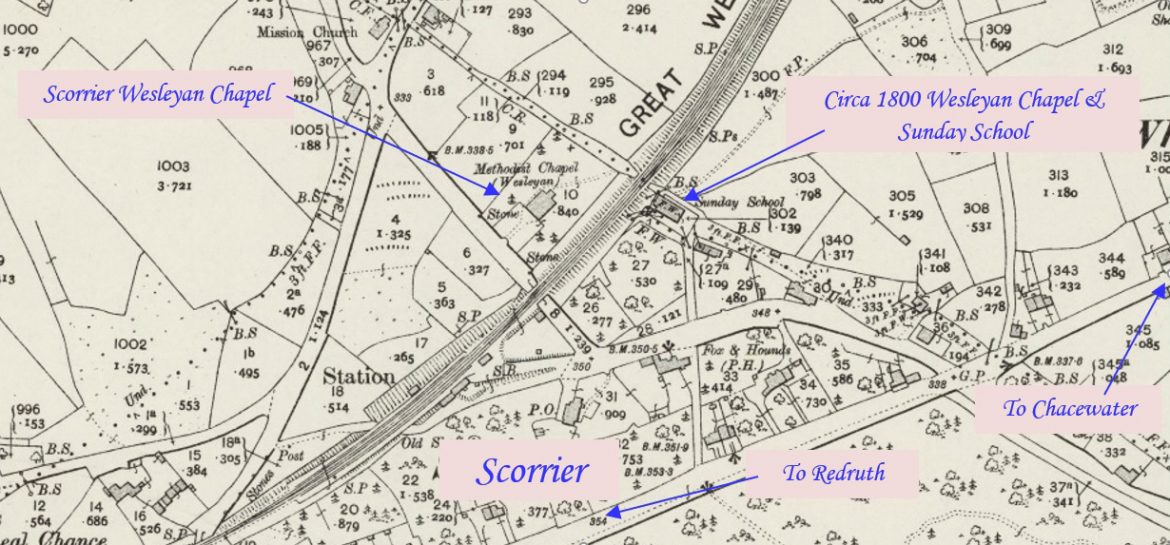
Scorrier is a village in the civil parish of St Day, about 2 miles northeast of the centre of Redruth and 3 miles southeast of the coast at Porthtowan. This profile of Scorrier Chapel has been compiled by Jo Lewis and Tony Mansell. 1800: Wheal Rose Wesleyan Chapel built. (SWChurches) Taking the next left…Continue Reading “Mapping Methodism – Scorrier Wesleyan Chapel”
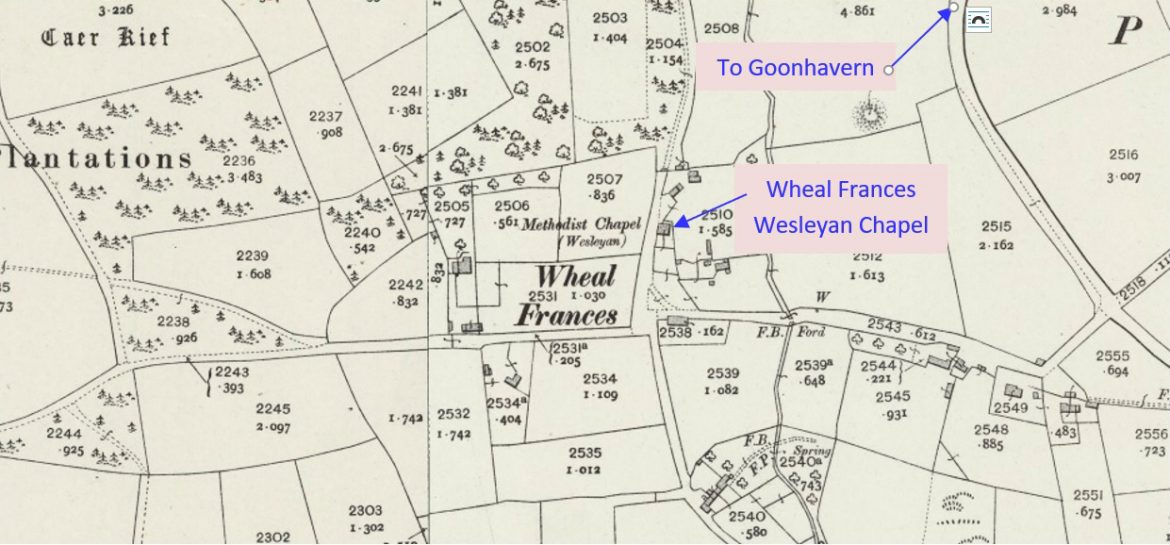
Wheal Frances is a village in the civil parish of Perranzabuloe to the south of Goonhavern. This profile of Wheal Frances Wesleyan Chapel has been compiled by Tony Mansell. A reference in Perranzabuloe Museum from The Ecclesiastical History of the Parish gives Wheal Francis (sic) as Wesleyan Methodist Chapel 1866. To seat 80. (David…Continue Reading “Mapping Methodism – Wheal Frances Wesleyan Chapel”
Halsetown is a unique village being the first recorded planned settlement in Cornwall. It is named after James Halse who founded the village in the early 1830s to provide housing for his mine workers. He designed the village so that each house had enough land (1/4 acre) to entitle the occupier to vote. The houses…Continue Reading “Mapping Methodism – Halsetown Wesleyan Chapel”