
This is one of a short series of articles focusing on some 19th century Cornish poets from labouring-class backgrounds. Largely now forgotten, they are nevertheless an important part of Cornish culture, overcoming their limited education to write poetry about the events and feelings affecting most Cornish people of their time. Only a brief selection of each poet’s work can be given here but a more extensive anthology is being planned.
James Henry (Roy Tretheo) Polgrahan: 1860-1948
The self-styled “Cornish poet,” writing as Roy Polgrahan, was born James Henry Polgrean to James and Mary Polgrean at the Lower Quarter, Ludgvan, Penzance November 1860. He was baptised as such in 1865, a year after the early death, aged 32, of his father, a stone mason. Polgrahan’s mother subsequently remarried, to Charles Hill, another stone mason. The family moved to St Ives and then to Bristol where the 1881 census shows Polgrahan as a plasterer, name recorded as James H Hill. By 1902, Polgrahan, disliking the name Polgrean, had created a new identity as Roy Tretheo (another invented appellation) Polgrahan, a surname name he probably made up. He now described himself as “an independent missionary… holding servicers at various places under the aegis of no particular denomination and at his own charge.” That year, in Merthyr Tydfil, he married Hannah Louise Whitman (1872-1957), an accomplished singer who accompanied him on his preaching. His family recall that he was frequently away as when he spoke at Newcastle Town Hall in December 1907 on “The Devil’s Revival at Monkwearmouth Sunderland.”
Although living in Clifton, Bristol, Polgrahan maintained close associations with Cornwall, preaching extensively in Mousehole in 1910 and being described in The Cornishman as “the fiery Mr Polgrahan …well known in Newlyn as a poet and for his untiring efforts for the fishermen and his opposition to Sunday fishing.” Returning to Cornwall, by 1918 the family was living in Botallack, St. Just, and Polgrahan was promoting his Penzance waste paper collection business under the name of J.H. Roy Polgrahan. However, widely blaming others, he was declared bankrupt in August 1922 with debts of £3,427.13s.8d and assets of just four shillings. Polgrahan’s responses during the legal proceedings appear to have frequently been truculent and evasive; at a subsequent related case local creditors were reportedly very dissatisfied with the information he gave. Afterwards, the Polgrahans left Cornwall, returning to live in Bristol, where he was listed in 1939 as “a commercial traveller (ret?).” He died in 1948, leaving five surviving children, and is buried with Hannah in Taunton.
Only eighteen of Polgrahan’s poems and three “songs” have been located to date. Several of these accompanied his challenging letters to the local press for, very unusually for Cornish poets of his time, many of Polgrahan’s poems actively relate to local campaigns and Cornish involvement on the national stage. By 1910, he had become prominent in opposing Sunday mackerel fishing in Mount’s Bay by huge steam drifters from East Anglia. He espoused another Cornish labouring cause when he campaigned against closure of Cornish tin mines and the loss of miners’ livelihoods after World War 1 attacking Lloyd George and others he held responsible in the acerbic parody Who Killed Cock Cornwall while the tortuous word play on washing and Washington in the poem of that name demanded “Who closed our mines and gave us doles/As dope to hypnotise our souls?”
Among his other surviving poems, Extremity, written In January 1918, offers consolation to a widow in despair, the controlled emotion here starkly contrasting with Polgrahan’s angry outbursts elsewhere. A similar tone underlies his appreciative tribute on the death of his father, the lay preacher John Polgrean. However, arguably, his best poem is The Cornish Miner’s Farewell. Told in the first person, it is longer and more intense than Hosken’s and others’ treatments of the exile theme, and links with Polgrahan’s powerful Sons of Our Fathers in which
“The rich may return and may root in the soil
But the poor of our people must carry and toil
‘Mid scenes far removed from the towers the tors
The sweet-scented flowers the heather-clad moors.”
His sympathy for the under-privileged always seems genuine but his appreciation of the Cornish landscape here and in Lamorna Dhune is uncommon in his surviving work: again setting him apart from his Cornish contemporaries.
Polgrahan remains a complex character: he was undoubtedly always a self-publicist and seemingly snobbish and arrogant in real life, as his photos suggest. Nevertheless, in his poetry he conveyed empathy for the struggles of Cornish workers and anger at those failing to support them. He shows an easy and controlled command of meter with very few infelicities. Unfortunately, the small number of extant poems precludes any fuller assessment of this controversial but talented Cornish writer.
********
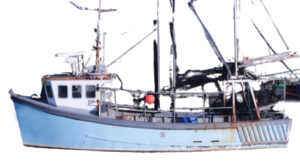
Polgrahan first gained public attention in supporting the cause of Cornish fishermen in their long-running dispute with “Yorkies,” large East Coast steam trawlers, fishing on Sundays, when traditionally Cornish vessels suspended work. In 1896, these activities had even led to the violent confrontations at Newlyn, referred to in stanza 5 below. Both from the religious aspect and, as later with tin miners, Polgrahan viewed this dispute as epitomising the struggle for a Cornish industry’s survival against external financial power, as his 1911 poem shows.
The Mount’s Bay Fishery Crisis
(Cornwall’s call: can nothing be done?)
Can nothing be done for the West Country men.
And the cause that has never a voice?
Shall Capital swallow up Tre, Pol and Pen.
While Capital’s lackeys rejoice?
Must Cornishmen dance to the money-bag tune
Of the Berserker on the maraud.
And watch their poor womenfolk starving in June
In sight of the all-seeing God?
Our sons and our daughters are scattered and gone
Like the dust, and we mourn them as dead.
Of comfort or prospect their fathers have none.
And their mothers have too little bread.
The strangers we welcomed to West Country ports,
To share in the spoils of the deep,
Have broken our laws, and are breaking our hearts,
While the friends of the West Country sleep.
What profits our singing, our preaching and prayers?
While we smile and encourage the curse
That sullies the Sabbath to soften the stairs
To the pulpit, and bulge out the purse
Of the few who are fattened by Sabbath day toil,
Whose Gospel is “grab all they can,”
Who aided the Viking invader to spoil
The tents of the West Countryman?
We stood up and spake; we made our complaint;
Our protest was heard in the town;
Our young men were wroth, but were held in restraint.
By the white-haired who stand by the crown.
A blow was not struck, a life was not lost.
For we honoured and held to the laws.
Yet they punished us, punished us much to our cost,
And crushed to death us and our cause.
They sent us the Berks, who crowded the Quay,
The Sixty-third Berks. What a sight!
They ordered a war vessel out in the Bay
A few fisher folks to affright.
They terrified women and children and boys
And our old men to silence and tears.
They robbed us of sustenance, comforts and joys,
That were ours by the usage of years.
They twitted us, twitted us, they who were slaves,
Twitted freemen with laziness. Oh!
They said, “Ye are idle,” and wince at the waves,
And hide from the winds when they blow.
They said we were fond of our wives; so we were,
As fond as the men ought to be
Who handle the lifeboats and know how to dare
The devils that haunt the deep sea.
They boasted, they taunted us. Lord, it was hard
To be told in the kingdom of grace
By the men who had never held God in regard,
Nor had wrought for the good of the race,
That they’d capture our ports and drive us to sea,
Then, they’d capture our daughters and wives—
‘Twas nigh to provoke us to purple the bay.
But they didn’t say that at St. Ives.
They talk of the State, and a Government grant.
But the first thing we need is a break—
A Saturday night is the principal want,
And a Sunday at home once a week.
When Monday arrives, given craft of the sort,
That the march of the moment demands.
And enough, we could quickly repeople the port
With our own banished home-loving “hands.”
The visiting boats to our waters are free
To fish all the week where they choose,
But we hold that the visiting vessels should see
That our rights are not theirs to abuse.
The people whose habit it is to revere
The Sabbath, whatever their faults,
Are not to be ousted and starved all the year
By conscienceless Capital’s dolts.
Sea Sundays would shame us, who Bible in hand
Have followed our fathers so long.
Our children would blame us who broke the command
And mixed up the right with the wrong.
The future would curse us for giving such head
To the Christ-killing scourge in the West,
While the past would divorce us, and count us as dead,
For selling our Birthright of Rest.
We ask no advantage, we bow down to none,
We bear not a creature ill-will,
But what we demand is the right to our own—
The Cornishmen are Cornishmen still
But since they are dead, who had otherwise heard
The wail of the West Country Celt,
The West Country soul through the world must; be stirred
And find out the way to be felt.
(1910.)
********
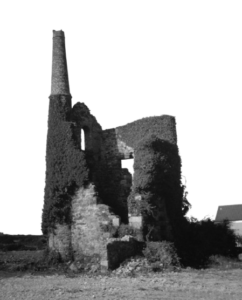
The other principal social cause that Polgrahan espoused was opposition to the closure of Cornish tin mines after World War I, a policy which forced many miners to seek work overseas. The narrator of Brother’s Blood or The Cornish Miner’s Farewell parallels those central to the earlier “exile” poems of Hosken, Harris and others.
Farewell, farewell, my native heath;
Farewell my native moor:
Devoted are thy sons to death.
Or to a foreign shore;
The Irish and the Welsh had wrongs
The Government has righted;
But we have nothing but our songs
Of Cornish miners slighted.
Wronged by the men for whom we fought.
Was it for this our sons were shot?
Farewell sweet heather bells of blue;
Farewell my golden glory:
Farewell, a long farewell to you;
Ours is the old, old story
Known to our fathers, known of old,
Known to our mothers crying
Remembered was your yellow gold;
Remembered in their dying
And cherished by their children who
From mother’s lips have heard of you.
Farewell, ye twice blest flowering furze;
Farewell, my gorse and heather;
The Government deserves the curse
Of both of you together,
For they have banished me from you.
Have parted us for ever –
The paths henceforth that I pursue
Shall homeward lead me never –
We gave the Government our best
For that they send us East and West.
Farewell, ye grey grown granite stones,
Memorial posts and paving;
Your sparkling grit is in our bones;
Farewell to you I’m waving:
Red sandstone, chalk, or limestone may
Possess a charm for others,
But you, ah, – you and I always
Were one: we two are brothers;
The product of volcanic fire
Made to endure, not to expire.
Farewell, ye lovelorn elvan heights,
Ye granite cliffs, farewell;
Farewell Scillonia’s flashing lights
That sweep across the swell
Of mighty waters where the ships,
The big ships and the small,
Pass to and from betwixt the strips
Of surf resisting wall
Still standing upright in the deep
Where Lyonesse lies fast asleep.
Farewell, thou wind whipt sapphire sea;
Farewell my azure ceiling: –
Dear land of my nativity
For thee there is no healing;
Thy wound is deep, but mine is worse,
Thy glory is for others;
Upon the children comes the curse
That fell upon their mothers –
Why are we thus decreed to roam
To seek our bread so far from home?
Farewell, farewell, ye golden sands;
Farewell ye blue waves breaking,
Like children falling on their hands
With ringing laughter shaking:
No more shall I enjoy the ring
Of our eternal laughter;
No more cry encore when you sing
“Roll Inshore and All After”:
No more your gambols on the shore
Behold, no, never, never more.
Farewell, ye wooded hills and groves;
Ye streams of crystal water;
Ye flowering hedgerows where our loves
Were told, and where the laughter
Of happy children once were heard
Farewell, farewell for ever;
The music of the singing bird
May mingle with the river,
The river mingle with the sea
But who cares what becomes of me?
Farewell, each dear remembered spot;
Each sea secluded cavern;
Each cove, each creek, each comely cot
From Brown Will to Bosavern.
Farewell ye old-world Nature nooks.
The Artists now will claim you;
The world will read of you in books;
The picture-lovers frame you;
But who for me will shed a tear
When I’m ten thousand miles from here?
Farewell, familiar sights and sounds;
Farewell, farewell, my people;
For me the fox may hunt the hounds,
The cock crow on. the steeple:
The hen that sits on china eggs
Will never hatch a chicken;
The chick that never grows a leg
Nor wing affords no picking
Farewell, there’s nothing here for me
And God knows what there’s left for ye.
He kills my soul who comes between
Ale and my soul’s salvation;
He is no friend to King or Queen
Who scraps my occupation;
He takes my life who takes away
My livelihood, my living;
He shall be damned and that to-day
Who gets what I am giving
As his memorial to the men
Distinguished by Tre, Pol, and Pen.
Farewell, my fondest, wife and child;
Farewell, a long farewell;
The winds without are rough and wild
Within they howl like hell
The wide world now remains to me;
To me, at sixty-one
The wide world now remains to ye
Farewell my wife, my son –
God will remember – I will send –
I’ll write you from the other end.
********
For Polgrahan, this plight of Cornish miners assumed “the proportions of a crime – a crime to be laid to the charge of the responsible head of the Government.” He attacked the politicians he held responsible, from the Labour Minister, Dr Macnamara, through to Lloyd George as in this extract from the song:
Cock Cornwall
(To the old rhyme of ‘‘Who killed Cock Robin.” ) An enquiry.)
Who killed Cock Cornwall?
Did you Macnamara,
With your “bow and arra,”
Did you kill Cock Cornwall?
Who killed Cock Cornwall?
Say, you, Mr. Bridgman;
You sharp-shooting ridgeman,
Did you kill Cock Cornwall?
Who killed Cock Cornwall?
What saith our friend Mond
Whose word was his bond!
Did he kill Cock Cornwall?
Who killed Cock Cornwall?
Sir Robert Horne, you,
The crack of the crew;
Did you kill Cock Cornwall?
Who killed Cock Cornwall?
Did David Lloyd George,
His great fame to gorge.
Did he kill Cock Cornwall? …
********
Lloyd George was further pilloried in the 1921 poems Washington and Go Where Glory Waits Thee. In the latter, though, Polgrahan’s opening anger moves towards grudging resignation.
Go where Glory Waits Thee
(To the British Prime Minister from the exiled Cornish miners.)
Go where glory waits thee;
Where none celebrates thee;
Where a people on the parish.
Kindly feelings cannot cherish
To the minister whose fame
Needs this also to his name –
He retrieved what we believed.
Made, his glory trail in shame –
If this aggravates thee,
Go where glory waits thee…
…Go where glory’ waits thee.
No one segregates thee.
No man with a British name
Should begrudge thee lasting fame.
None may duty teach thee;
None of sloth impeach thee;
Should green envy reach thee
It will not come from the West;
But remember we’re oppressed;
Robbed of self-respect, distressed;
Rooted up, and scattered,
As if nothing mattered;
Driven far from hearth and home:
Made like vagabonds to roam
Overseas at eventide
When at home we should abide: –
Think of this when snug beside
Thy wife at home this Christmastime.
Thine congratulates thee –
Mine – what if she hates thee?
Compensate the Cornish mines
While the Sun upon thee shines;
Though none compensates thee
Go where glory waits thee.
********
Reparation further emphasizes the sense of grievance:
All things we thrive on tin and fish –
Fish, there’s plenty in the sea;
Tin, abundance in the mines
But Reparation there must be
Before the Sun upon it shines.
Reparation! Reparation!
That’s our temporal salvation.
What is taken, that restore
What is stolen steal no more;
All your unemployment pay
Gives not what you took away.
Give us back our mines and work
Honest work and honest wages;
Scrap the dole and scrap the shirk
Scrap not industries of ages
Scrap your whiskies and your wines
Do not scrap our Cornish mines.
That’s the gist of our contention –
Unemployment, there will be
When you’re pocketing your pensions,
Piled up on the policy
Of pulling honest people down
Till they cry out to the Crown.
********
Polgrahan indeed wrote a poem appealing to the King for support: The Cornish Miners Appeal to Caesar which begins:
A loyal people, Sire, and true
With something in them royal too
In their extremity to you
Appeal;-
Men not a mass of discontent;
Men not a mob on mischief bent
But men who righteously resent
A deal in foreign ore on foreign lines;
A deal that bottled up our mines;
Cut off our sources of supply
And covered us with misery…
********
Among the very few personal poems that survive are Polgrahan’s tribute to his father in
Extremity
Death knocks the bottom out of life
Lest we should love this world too well.
Death takes the man and leaves the wife,
Or vice versa, who can tell
The why and wherefore? This we know
When our turn comes we too must go.
What then? The readiness is all.
With cheerfulness let you and I
Live daily as we’d like to die.
And when we answer to the call
To render up this borrowed breath—
Die, smiling in the face of death.
********
Polgrean (1911) and Percy Chirgwin(1918) offer similar sentiments but perhaps his best poem of this genre is the early work of 1903, written under the name of Tretheo Polgrahan, on the death of Queen Victoria: I have found him. (Victoria Triumphant-Divine Reunion.)
Why weep for me, my children why regret
That I have left the tenement of tears?
That I have lost a load the weary years
Could not remove, and I could not forget?
Why drape yourselves in black, as if the night
Of God’s great Wrath had gathered o’er my soul
When I am far beyond the Wrath, and roll
Of all that doth the fearful soul affright?
Why mourn for me now I have safely crossed
The treach’rous tide and am no more opprest
With speechless longings, and the wild unrest,
And nameless sorrows of the tempest tossed?
For as the lonely dove desires the land
To which her mate has ventured long before,
So I have longed to reach this pleasant shore
Where I could see his face, and clasp his hand.
And here upon ambrosial banks we walk,
As once we walked on earth, but more secure,
And by these living waters clear and pure,
Of past delights and present joys we talk.
For here no sorrow hangs upon the heart,
And here no tear-drops gather in the eye,
Nor do the flow’rs we cherish droop and die,
Nor are conjugal spirits torn apart.
And here the voice of war is never heard;
Nor can the cruel claws of fell disease
Upon a helpless creature’s vitals seize,
And steal her breath without a warning word.
But here the blessed law of Love prevails,
And loud rejoicings evermore increase,
While glorious anthems to the Prince of Peace
Abound, but here the widow never wails
And here no night can come nor unseen foes
To pounce upon our persons unawares,
Nor do we bend and groan beneath the cares
That earthly crowns upon our hearts impose.
O here we rest in sweet security;
Beyond the reach of every form of ill,
While joy divine our happy bosoms fill,
For God himself has wiped our tears away!
And do you well to weep? Nay you should smile,
O smile with me now all my woes are past,
And I am with my sweet, my love, at last,
For I have found him whom I lost awhile!
********
Although Polgrahan focuses on people rather than places, Songs of Our Fathers and, in particular, the 1911 song The Old Countee – with its proceeds devoted to the Trelawny Memorial Fund – offer a rousingly positive tribute to his native Cornwall.
The Old Countee
There’s a spot in the West by the big blue sea
That is dear to you, and is dear to me.
’Tis the home of the brave, the fond and the free,
Known by the name of the old Countee:
There the wild birds sing, the warm winds blow,
The sweet flowers bloom, but we see no snow.
For the stars are bound by an old decree
To smile all the while on the old Countee.
Refrain:
O! the old Countee,
O! the old Countee,
The stars are bound
By an old decree
To smile all the while
On the old Countee.
We may wander far, we may wander wide
From the dear Old Mount or the Tamar’s side,
And when we have seen all there is to see
We sigh for a glimpse of the old Countee:
We may live in the sun, we may live in the moon.
We may be born to the “shew!” * or the “silver spoon,” (* spade or shovel)
We may rise in the world, we may fall in the sea.
But we all hope to die in the old Countee.
Refrain:
We are Cornishmen and we come at call
At the sound or sign of “One and All’:
We are One at the core, and we All agree
That there is no other place like the old Countee
If we stand we stand, if we fall we fall,
But to sink or swim, we are “One and All.’’’
What we’ve always been, that we’ll always be
For the love that we bear to the old Countee.
Refrain.
 Ernie Parsons
A very (!) mature student, Ernie was awarded an M.Phil. degree in 2024 from the Institute of Cornish Studies for his study of the Helston poet, James Dryden Hosken. Ernie is continuing to research other lesser-known and mainly “labouring- class” Cornish poets of the nineteenth century, and was recently asked to become the Cornwall / Kernow editor for the Catalogue of Labouring Class and Self-Taught Poets c.1700-1900. (www.academia.edu/129855538). He has also researched the nineteenth-century portable theatres of Cornwall.
