
 Cheesewring (Photo: Terry Harry)
(Links are in blue)
This Month’s Cornish Articles and Poems
Joseph Dingle & Charles Rashleigh
The origins of the modern transformation of Charlestown are not rooted simply in aristocratic enterprise, but in the bleak realities of the eighteenth-century parish poor law system.
Writing this article has been a sobering experience. I have developed a better understanding of those who were forced to seek relief, and the realisation that some of my ancestors were among those who entered the poorhouses, begging for help, has enhanced my empathy.
Celtic Festivals and Brythonic Threads
The threads that connect Cornwall, Wales and Brittany reach back to the tribes of pre-Roman Britain, the shared origins of the Brythonic languages, the Golden Age of the Saints, placenames, and even the propaganda of the Anglo-Saxon Chronicles make clear the relationship. This article follows one particular thread, that of the “Celtic festival” where cultural traditions of music, dance, sport, and language are shared and celebrated.
Morvalwen: The vengeful Mermaid of Seaton Bay
Three fishermen of Seythyn sailed o’er the Pleg-mor to cast their nets. Back and forth they tacked across the wind then turned for the final run home. They grasped the lines of their net to haul it in. They strained and heaved; they paused to breathe, then heaved again. Had they caught a heavy shoal of fish, or was it a playful young whale? Was it a monster out of the deep, that with one flap of its mighty tail could send both boat and crew forever beneath the waves? They grappled with the net. They gasped, they groaned, they cursed and moaned, at last the lines broke free.
Camborne is now largely defined by the annual celebration of its most famous son. The crowning glory of those celebrations came when a working replica of his great engine re-created the run “up Camburn Hill” in 2001.
We include articles and poems related to Cornwall so if you are seeking a platform for your work please get in touch: editor@cornishstory.com
Cornish Books
Publication to mark Black History Month
My Manifesto for Cornwall (Ow Derivadow Rag Kernow) by Garry Tregidga and Andrew Climo
‘My Manifesto for Cornwall’ was citizen engagement initiative of the Cornish Democracy Unit based at the Institute of Cornish Studies at the time of the 2024 general election. Voters from across Cornwall were given the opportunity to put forward their own priorities for the next 5 years. The aim was to identify local concerns, along with possible solutions, which could be presented to Cornwall’s elected representatives and then used as the basis for further research and dissemination.
For a copy of the findings, which contains 35 of the manifestos. For a copy of the findings, which contains 35 of the manifestos, please see: Manifesto for Cornwall.
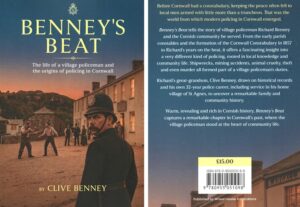 A fascinating new book by Clive Benney, Cornish Historian and Cornish Story author.
Available direct from Wheal Hawke Publications on clivebenney@aol.com. £15 plus £3 tracked postage, St Agnes Museum online shop or Churchtown Arts, St Agnes.
Projects
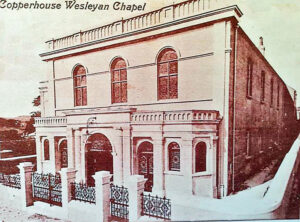
Compilation of Truro Inns and Pubs
Compilation of St Agnes Inns & Pubs
Rescorla Cultural Centre Events
(Cornish Story is a part of the Rescorla Centre)

Creative workshops and events at the Rescorla Centre with an emphasis on Cornish History and Craft delivered in association with Cornish Story and the Institute of Cornish Studies. Click here for details.
On Saturday 21st November at 2.30pm our speaker at Rescorla is Trevor Lawrence, the well-known local historian and storyteller. Trevor will talk on the subject of ‘Croan Ford and the Bodmin/Wadebridge Railway’.
Situated between Bodmin and Wadebridge, in the parish of Egloshayle, Croan Ford played an important and little known part in the creation, in 1834, of one of the earliest, regular, steam powered passenger carrying railways in Britain. Come and find out how this came to be.
Before we consider Croan Ford’s connection with the railway age, our morning session starting at 10.30am will explore the wider context of diverse communities. We will consider how differing geographies—from coastal fishing ports and rural farming parishes to bustling industrial hubs focusing on tin, copper and clay created a patchwork of community identities.
Other Events include:
Cornish Studies Group on the third Saturday of the month at 10.30am.
Celtic Music Session on the third Saturday of the month at 7.00pm.
Kegin (Cornish for ‘Kitchen’) session on the last Saturday of the month at 10.30am. Food, music, singing, dialect readings, and poetry around the kitchen table.
Rescorla Book Club throughout the year. Please email Tracy Pithie for further details.
Please email Garry Tregidga to pre-book.
Cornish items by other writers or organisations
In accordance with our aim to promote a greater knowledge of Cornwall and the Cornish Diaspora overseas, we are pleased to include details of films, books, articles and projects relating to aspects of Cornish culture past and present.

Cornish Story is an initiative that works in association with the Institute of Cornish Studies.
The Institute of Cornish Studies (Fondyans Studhyansow Kernewek) seeks to promote a greater knowledge of historical and contemporary Cornwall.
As a partnership between the University of Exeter and Cornwall Council, the Institute combines academic research and teaching with community engagement.
Copyright (C) 2026 Cornish Story. All rights reserved.
Your name and email address is held on a restricted access Cornish Story digital list so that newsletters can be sent to you. It is not available to any other persons or organisations.
If you wish to unsubscribe to our newsletter mail-outs please advise us: editor@cornishstory.com