
The Fisk University Jubilee Choir Tour of Cornwall
Black Musicians in the South West 1894-1895
By Lynne Mayers
The Story of Discovery
It all began with the arrival of an old scrapbook at the Perranzabuloe Museum in 2014. To call it a scrapbook is a serious dis-service, for it is a leather-bound ledger which runs to over 400 pages and probably contains over 1000 items of ephemera. In addition it includes journal entries written by its owner, between 1882 and 1903 (1). The owner in question was the general store manager and postmaster, in the then developing town of Perranporth. His name was William Tremewan. He had used the ledger, originally intended as a mine cost book, as his shop accounts from the early 1870’s, recording on-going credit for his customers. When the ledger was no longer needed, he then used it for his own personal memories and diary. He had saved a whole range of ephemera and documents over many years, which he inserted fairly randomly into the book. The earliest documents are from the mid-19th century, but most date from the last few decades of the 19th century and into the 20th. His last entry is in 1903. Among the concert programmes, tickets, photographs and fliers is a hand-written entry that jumped out from the page and started the rediscovery of this Fisk Choir Tour (Fig 1):
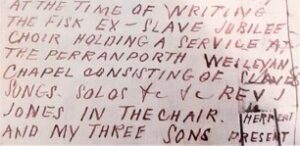
Fig 1: Scrapbook Entry 17th October 1894
‘At the time of writing the Fisk Ex-Slave Jubilee Choir holding a service at the Perranporth Wesleyan Chapel consisting of slave songs, solos etc. Rev. J. Jones in the chair, and Herbert and my three sons present. Wednesday Eve 8.40 Oct 17 1894.’
Sadly, William gives no other mention or detail about this visit. However, this entry in the scrapbook caught the eye of Karrin Easton, volunteering with her late husband at the Perranporth Museum, who was also a member of the Red River Singers. She immediately sensed the importance of this simple entry in the context of Cornwall’s musical heritage and reported her findings to Hilary Coleman (their musical director). Hilary then began researching what music this Fisk Jubilee Choir may have performed. Shortly after, the author of this paper offered to index the scrapbook (as the 1000+ entries appear randomly) and came across the same entry. This triggered a different line of investigation; into the origins of the choir, and how and why they came to Cornwall.
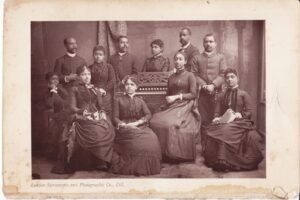
Fig 2: Frontispiece Photo of Fisk Jubilee Choir 1882
(discovered in Hayle 2021)
This latter research started off slowly. It was possible, using UK newspaper archives, to roughly trace earlier ‘Fisk Jubilee Choirs’ who toured Britain and Ireland in the 1870s and 1880s. From the Fisk University archives it was also possible to learn more about the origins and aims of the Fisk University in Nashville. However, finding records about the Fisk Jubilee Choir who came to Cornwall in 1894 was much more difficult. On-line coverage of the Cornish newspapers was rather limited, plus digital word-recognition didn’t readily identify ‘Fisk’ correctly. In addition, the Fisk University archives had no record of this Cornish tour, and neither was anything significant to be found at Kresen Kernow or in the Cornish Methodist Archives.
However, things began to change, when an image of one of the Fisk Jubilee Choirs was found at an antiques unit in Hayle (2) (fig. 2). It was an excised page, almost certainly the frontispiece taken from one of the several editions of ‘The Story of the Jubilee Singers’ published by Hodder & Stoughton. The exceptionally good-quality sepia photo has since been identified as a photo taken in 1882. This raised the question as to why such a photo should appear, 140 years later, in Hayle. Subsequent to that, the Easter Day Songs of Praise broadcast by the BBC in 2023 mentioned the first Fisk Jubilee Choir which came to the UK in the early 1870s. Viv Broughton was the researcher who had provided information for the programme, and had been studying these early Fisk choirs and their music for a considerable time. He had not heard of a Fisk Choir visiting Cornwall in 1894, but was able to recommend further research material.
As the newspaper reports indicated that the choir visiting Cornwall in 1894 was primarily performing at chapels belonging to the various branches of Methodism, a letter was also placed in the Methodist Recorder in 2023 to enquire whether individual churches or circuits held any information in their archives. No formal records were found, but as a result of this request we received a very special package. It contained four programmes for two concerts given in Whitehaven by one of the Fisk Jubilee Choirs in September 1898 and November 1900. These programmes are very fragile, due to their age, but contain not only photographs of the choir members but also the songs performed (see fig. 9).
By late 2024, the on-line newspaper searches were giving more coverage for the south-west, and the digital word-recognition was also more sensitive in picking up relevant information. These new searches showed that the ‘1894’ choir was actually in Cornwall for over a year in 1894 and 1895, in the south-west for about three and a half years, and on tour in Britain for about seven years (from 1891-1898). As the newspaper reports of the wider tour were occasionally very detailed, the author was able to pass on the titles of songs and hymns that the choir had in their repertoire, to Hilary Coleman and the Red River Singers. (Most of them appear in the earlier editions of The Story of the Jubilee Singers and The Red River Singers now regularly perform a selection of these). Some of this music is still sung in Cornwall, and Hilary has been able to trace their origins to the Fisk Choir performances and publications, and with the knowledge that they originated in America as camp songs, or songs of enslavement. The Red River Singers and the author have now worked together at several public events, presenting some of this music and telling the ‘Fisk’ story.
The Fisk University Story
To go back to the very beginning of the ‘Fisk’ story we need to travel in our imagination to Nashville, Tennessee, at the very end of the American Civil War. Nashville had been the first ‘Confederate’ city to fall to the Unionists in 1862. There had been major shelling followed by hand-to-hand fighting and the city had been left in ruins. By the time hostilities had ceased in May 1865 most of those who had been able to, had long-since fled, leaving a poverty-stricken population living among the ruins and attempting to rebuild where they could. This population was mostly made up of working-class whites, free coloureds, plus over 7,000 who had escaped enslavement from the surrounding rural areas. Many were illiterate, homeless, hungry and jobless.
However, Tennessee was one of only three of the southern states where the teaching of slaves to read or write had not been banned (although the opportunity had mostly been denied, due to local hostility). This meant that there was a small nucleus of those who had been enslaved who could read and write and, alongside this, there was huge hunger for education in the general population; ‘there was an eagerness to learn that was like an all consuming fire….Families pinched with hunger asked more eagerly for schools than for bread.’
Within months of the end of hostilities several schools had sprung up among the ruins. These schools were often based on networks of black-led structures that had existed prior to emancipation; such as the organised escape routes, low-profile access to teaching and training, abolitionist music etc. Some were operating without external funds, but the Fisk Free Coloured School (named after one of its founders) was supported by the American Missionary Society, and opened in January 1866.
The first teachers at this school were locally-based free coloureds who had received some education, self-taught emancipated slaves and white graduates from the pro-abolitionist Obelin College, Ohio (one of the ‘stations’ on the Underground Railroad).
Despite emancipation, these schools were not universally accepted. All of the first Nashville schools met with hostility; staff and pupils were regularly attacked and schools burned down. One female teacher was shot and killed. Others believed that education, along with conversion, would be a civilising influence, and remove thousands of destitute people off the streets and into classrooms and churches, thus making Nashville safer. A few, however, recognised education as a universal right – and would risk life and limb for the right of their pupils to learn.
The Fisk School was the one school that survived in long term, and the AMA had managed to purchase, in secret, an old military hospital in a marshy and inhospitable part of town, consisting of old wooden single-storey barracks. (It was on the site of the current Union Railway Station). From the outset, the purpose of the school was to train black teachers and ministers to graduate level (although the school was open to all). As part of their training, the older pupils ran and maintained a number of schools in Nashville and in the rural communities nearby. At the end of its first year the School had over a thousand pupils. Children attended classes, either in the morning or the afternoon, while the adults attended evening classes and at weekends, in addition to their teaching day. There was a huge demand for the places that were offered:
Women of three score and ten sometimes mastered the alphabet in a week. Old men bent over the same spelling-books with their grandchildren.’ (4)
When Nashville City took over the responsibility for primary education of all its resident children in 1867, the Fisk School was able to focus on its founding task, and was designated a University. On average it took eight years for the first pupils to graduate, bringing them from the point of little or no literacy to degree level. In 1869, Fisk was described as ‘the best teacher training school in the entire south’.(5) By 1870, Fisk University was running twenty-one schools and had appointed one hundred and ten teachers to this task.
The Jubilee Choir Story
Fisk was blessed with two particularly talented musicians; the University treasurer George White, and Ella Sheppard who both sang and played the organ and piano. Through them, choral singing became an important part of the social life of the University. Both were self-trained in music but demanded excellence from their pupils. They also began collecting contemporary and local music, variously described as ‘negro spirituals’, ‘songs of jubilee’, ‘plantation melodies’, ‘slave hymns’, ‘sorrow songs’, or ‘cabin songs’. It was while they were perfecting the performance of these songs that they also began committing them to western-style music annotation, some of it for the first time.
Many of the songs had been born out of the black abolitionist struggle which meant they had mostly been sung in secret. George White, mindful of the origins and sensitivities of this music, spent weeks (and sometimes months) with his choir perfecting the sound, tone and meaning of the songs and lyrics. Ella was their very skilled accompanist.
By 1870, the temporary hospital buildings in which University had been housed were collapsing. The University was $78,000 in debt and its students were destitute, cold and hungry. George White persuaded the management to part with some of the last precious funds, to enable him to take the choir on tour around the north-eastern states of America. This first choir initially toured for six months from October 1871, and met with a very mixed reception. They discovered that very few black people could afford to attend their concerts, and that racism was still very much alive in the so-called ‘liberal’ north. Although tickets sold to the white population, their programmes of mostly classical music were not fully appreciated. However, where they sang their ‘sacred music’ it was a different story. The choir raised £20,000 and now had a clearer understanding of what they could achieve.
Their programmes of mostly classical music were not fully appreciated and there was a need to change their programme to their ‘own’ music. This was not done without much debate and soul-searching, as they were effectively ‘outing’ this very private and valued heritage
The decision was made to make their music more public, while making it clear that singing their music was an act of devotion and remembrance, rather than a performance. They, therefore, requested that audiences received it as such, and refrained from clapping.
With a network of contacts now in place, a second tour was arranged almost immediately. In June 1872 they were asked to sing at the eighteen-day World Peace Jubilee in Boston (celebrating the anniversary of the end of the Franco-Prussian War). It is believed that this was the first occasion when African-American singers were included in such a large public event. The choir sang in some of the smaller venues, and then sang The Battle Hymn of the Republic at the main hall seating about 25,000 (fig. 3). They sang the verses, but were joined for the chorus by an orchestra of over 1,000, more than 10,000 singers plus a battery of cannons! They became a sensation and their fame was established (6).
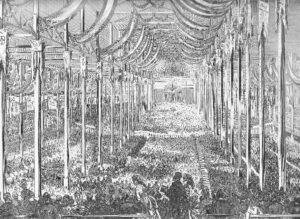
Fig. 3 Boston World Peace Jubilee 1871
It was around this time that they settled on the name of Jubilee Choir, celebrating the time of emancipation which had been declared ‘The Year of the Jubilee’. (This was based on verses from Leviticus chapter 25 ‘every fiftieth year you shall proclaim liberty throughout the land; it shall be a jubilee for you.’ when people were to be released from debt and enslavement).
Their second tour raised over £20,000, half of which was used to buy a new site for the University at Fort Gillam. In true Fisk-style, they set their sights high from the outset – there would be no more wooden buildings, but a ‘proper’ stone built University worthy of the name. However, this required another £25,000 of funds, so an even more ambitious tour was planned; to Britain and Ireland.
By the time of this first overseas tour the Fisk Choir had established their own dress-code. They wore the Victorian fashions of the day. The women wore full-length black dresses and jackets with much decoration of embroidery, beads, ruffles and pleats, while the men sang in formal black three-piece suits, white shirts and black bow ties. (This was to distinguish themselves from the ‘blacked-up’ minstrel groups who were also becoming very popular at the time, and wore more casual clothes).
This first tour overseas lasted for just over one year, from April 1873 until June 1874. The choir sailed from New York to Liverpool, and consisted of eleven students, nine of whom had been enslaved. (The others were children of slaves). They travelled with important letters of introduction – probably the most notable being to Earl Shaftesbury (as he was then). As Shaftesbury had close working links with the American Missionary Association, which had been part funding Fisk University, this was a natural link for the choir. He was the one who arranged their first concert with an audience of six hundred, which included the Duke and Duchess of Argyll. Events snowballed from there, and Queen Victoria requested a private audience with the choir at their second concert. In very quick succession they were also introduced to the publishers, Hodder & Stoughton (who were later to publish several editions of their story and music) and to Charles Spurgeon, the renowned preacher. They were then invited to sing at Spurgeon’s Tabernacle, where there were regularly six thousand at his services. In the July, they performed at the Crystal Palace, at the annual celebrations of the National Temperance League. These links; most especially those made through the family of Queen Victoria, meant that their international fame now truly was established!
After three months in London, they went on tour around Britain and Ireland, travelling up the east coast into Scotland, then west to Glasgow and across to what is now Northern Ireland. They returned via Liverpool and down through the Midlands, over into East Anglia and ending with a few visits on the south coast. By chance, they met Sankey and Moody (a newly arrived and little-known preaching team from the US) in Newcastle-upon-Tyne. The Fisk Choir began to provide music at their evangelical preaching services over several weeks. Subsequently, they didn’t tour together but worked together whenever their paths crossed.
The choir returned home to Nashville in July 1874 after raising £20,000 towards the building of their Jubilee Hall. As more funds were still needed, they embarked almost immediately on another tour, with little recovery time. This second tour built on the international contacts they had made as a result of the first, which also took them into Holland and Germany. They left Nashville for the northern States in January 1875, and by the end of May were in London. They returned in July 1878. The building funds had been held back, in part because the AMA, who banked the funds, was struggling financially, and this had resulted in delays in construction of the new university building. Although the Jubilee Hall had been occupied by the students and dedicated from January 1876 (the 10th anniversary of the establishment of Fisk School) it was in an unfinished state. It was eventually completed in 1878.
While the choir had largely funded the new building, Fisk University continue to struggle to cover the everyday teaching and maintenance costs. So it remains a mystery as to why the University did not directly support any further choir tours, bearing in mind the huge financial success of the first two tours outside of the USA. Lack of continuity may have been the reason, as this was a time of changes at management level; both in terms of leadership and policy.
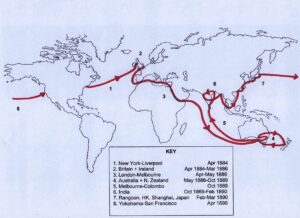
Fig. 6 Loudin’s Fisk Choir World Tour 1884-1890
As a result of the withdrawal of sponsorship, George White arranged for a newly constituted choir to tour independently, while still promoting Fisk University. The first independent tour in 1879 was to the northern States and into Canada, where they experienced as much racism as before, if not more. By mid-1882, George White was forced to step down as musical director due to ill-health, and in September Frederick Loudin (one of the longest-standing choir members) took over. He was a free-born black, originally from Ravenna, Ohio, where he had trained as a printer’s apprentice. He then found he was unable to find work as a journeyman due to continuing prejudice. George White had heard of Loudin and his music and recruited him as a soloist in about 1874. In 1884 Loudin took the choir on their first ‘round the world’ tour. His wife, Harriet, was the choir administrator (booking accommodation, concerts and travel) as well as acting as chaperone to the female members of the choir.
They arrived in Britain in April 1884 and sang to large audiences (the largest of which was seven thousand in Liverpool) before travelling on to Ireland. At the beginning of April 1886 they sailed from London for Melbourne via the Suez Canal. They then spent three and a half years in Australia and New Zealand. From there they travelled to India, via Ceylon, and on to Rangoon, Hong Kong, Shanghai and Japan, returning home via the Pacific in April 1890, six years later (fig. 6).
Loudin’s choir (in different configurations) continued to tour for another twelve years. They were in the UK by 1897, and surviving programmes show they were still on tour in the Whithaven area in 1898 and again in 1901. In either 1902 or 1903, Loudin had a heart attack while on tour in Scotland and returned to his home in Ravenna, Ohio. The choir struggled on without him, but when he died in November 1904 it was disbanded.
Meanwhile, other choirs had been set up by Fisk ex-students, sometimes also using the name ‘Fisk’. In addition ‘Jubilee Choirs’ sprung up in various parts of the eastern American states, but not to be confused with ‘minstrel groups’ where white singers ‘blacked up’ and performed song and dance routines. Over one hundred and thirty ‘Jubilee’ or ‘Fisk’ groups have so far been identified (7). While some who took up the name of ‘Fisk’ had a genuine connection, some were cashing in on the success of the original choirs, without necessarily having a link to the University at all. Among this confusing picture, we come to the reference to the ‘Fisk Ex-Slave Jubilee Choir’ performing in Perranporth in October 1894.
The Cornwall ‘Fisk Choir’ Story
The ‘Fisk Jubilee Choir’ that came to Cornwall in 1894 was certainly not Loudin’s Choir, because they were performing in northern parts of the UK at the same time that this choir was in the south. Although they were travelling under a similar name and using the same music, their model of working was slightly different. They were not generally advertising ahead of time through the local press, nor performing in large central venues, as the Loudin Choir did as a matter of course. Instead, they were more dependent on invitations from local chapels. Their manager/secretary was a white British-born clergyman, but who left the musical expertise with the black-led choir of six. There doesn’t appear to have been any connection between the two choirs, and as yet it is still unclear whether the ‘Cornish’ Choir had any specific connection to Fisk University. While there were several references in the newspaper reports to such a link, there was at least one item suggesting that the choir’s claims may have been misleading, and as a result they were not invited to the Baptist churches in the Newton Abbot area. (8)
What is certain is that this choir was in Cornwall from at least July 1894 until August 1895, as part of a much longer seven-year tour round the home counties, south and south-west England, and Wales. It was headed by a Methodist minister, the Rev. William J. Lacey. William often fulfilled a preaching role in Sunday worship, but largely acted as the master of ceremonies for the choir performances. (He may have arranged the tour as a seven year ‘furlow’ – as some of the tour was spent in the vicinity of his home in Buckinghamshire).
It is not clear where the choir travelled from in the States, but it seems they sailed into Liverpool sometime in late 1890 or early 1891 (9). The first known booking for the choir was in Gloucestershire in January 1891. The choir then travelled up through the Cotswolds to Oxford, and Buckinghamshire. By January 1892 they were in Hertfordshire and moving into Buckinghamshire again. From April, they travelled through Berkshire, Wilshire and Hampshire to be in the Yeovil area for Christmas 1892. 1893 was spent in Dorset, Somerset and Devon, and they had arrived in Cornwall by early July 1894. During these three years they had performed in at least ninety-two different towns and villages.
The tour seems to have been a mixture of ahead-bookings (such as the regional Temperance Conventions in Plymouth) and local invitations arranged more informally. They sometimes carried letters of introduction to take from one place to another but word of mouth in an ad hoc manner also seemed to work just as well. In addition, it was not unusual for them to be re-invited back to a venue at a later date.
From numerous newspaper accounts over the seven years of the tour, it appears that the funding basis of this Fisk Jubilee Choir was to divide the proceeds of their concerts and presentations between the host organisation and themselves. For instance, when singing at Greenbottom Chapel, just outside Truro, the money raised was split between the Sunday School and themselves. Often, they were supporting refurbishment or building schemes. Other times it was for specific mission purposes – such as rural evangelism or work among the black communities in the southern states. Their portion of the funds was needed to pay for accommodation, food and transport, as well as (presumably) to pay the individual choir members.
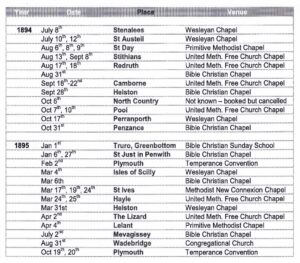
Fig. 7 Lacey’s Jubilee Choir Tour of Cornwall 1894-95
For the twelve months that they were in Cornwall, the list of their known whereabouts shows that they were backwards and forwards within the county fairly randomly (fig. 7). As there are a number of weeks where no record has yet been found, it is likely that their actual movements were even more arbitrary. However, there was a general pattern to their visits; they appear to have stayed between two and seven days in each place, offering an almost set programme. In Cornwall, their invitations were to non-conformist chapels only (whereas they had occasionally performed at parish churches elsewhere). The majority of appointments were at Methodist Chapels; most frequently at Bible Christian or United Methodist Free Church Chapels. They did not generally advertise their concerts in the villages or smaller towns in the press, but short adverts were sometimes placed when they were moving on to larger conurbations. (These were probably financed by the larger town or city churches as part of their regular placements with the press). In the adverts, the choir seems to have titled themselves ‘The Fisk Ex-Slave Jubilee Choir’ and their music was regularly advertised as ‘quaint and weird’. (One assumes that these words must have had a different and more positive connotation than now).
The last reference to the Fisk Jubilee Choir in Cornwall is at Wadebridge on August 31st 1895 and, in just over a year in the county, they had visited at least twenty-two venues. After that they then travelled back through South Devon to Exeter, and then on to the north Somerset coast to Cleveland. They were in Cardiff by June 1896. Although the choir performed in various places in South Wales over the next two years, there are significant gaps in the dates found for this part of the tour. It is possible that they may have travelled through central and north Wales, or even over to Ireland during this time. Of the known performances on this last leg of their tour, they visited at least thirty different towns, villages or cities. The last known date for them in Great Britain was at Devizes in July 1898.
The Fisk Choir People
This ‘Lacey’ Fisk Jubilee choir was rather smaller than the first Fisk choirs and Loudin’s later groups, with just six choristers. William J. Lacey (sometimes mis-recorded as John W. Lacey) was their manager. As with Loudin, the choir training and musical directorship was ‘in house’. Lacey seemed to have no part in the musical side of things, as their director was Elizabeth Webster, one of the choir members.
The Jubilee Choir happened to be in Cirencester at the time of the 1891 census, and the relevant schedule is an invaluable record of who constituted the group at that time (fig. 8). Just four choir members are recorded, along with Lacey, as resident at 29, Cicely Hill, the home of Jane Brown (which was probably a boarding house). All five are recorded as ‘vocalists’ and born in the US (which, for Lacey, is believed to be wrong on both counts). All were also single. In addition to Lacey, the others were their musical director Elizabeth Webster (described as 28 years old); Tom Ferrandez (57 years old); William H Archer (38 years old) and Lena Forrester (16 years old). This is the only time William Archer has so far been mentioned in the seven-year tour; and he seems to have been replaced by a Mr Johnson as tenor soloist by March 1892. Elizabeth Webster led and trained the choir for the entirety of the seven-year tour and was central to its success. Tom Ferandez (variably spelt) was the only member who had been directly enslaved, and regularly told his story in church services and concerts. On occasion he performed tambourine solos, and he was also remembered for his humorous renditions of some of the secular songs that were included in the choir’s repertoire. He too remained part of the group for the entire seven years. The ‘Misses Baird and Forrester’ are recorded in newspaper reports in 1892 and 1893, the latter being only 19 years old when the choir arrived in Cornwall. Miss Baird does not feature in the 1891 census so we do not currently know her first name or her age. In 1897, a Miss Jessie is also mentioned as singing a solo at Merthyr Tydvil. She may have been the fourth female member of the choir, or she may have been Miss Baird, with this referencing her first name.
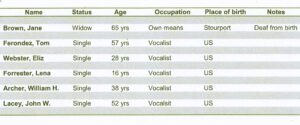
Fig. 8 Transcript of 1891 Census Schedule Cicely Hill, Cirencester
It is thought that the Rev. William J. Lacey was born in Foulmere, Cambridgeshire around 1840, but was brought up in Chesham where his family were harness and saddle makers. He was ordained within a branch of Methodism but when or where is not known, and when he went to America is unclear, but in one of the newspaper reports he was described as a missionary with American Episcopal Church. He was the childhood friend of Baptist minister, Rev. H. W. Payne, who they all visited at Bovey Tracey in February 1896. At the time of the tour William was already well known for his temperance work, and work with Sunday Schools. He may be the William J Lacey who had published several books for young people between 1883 and 1888 (mostly published by the Sunday School Union in London, in conjunction with the National Temperance League) and had also written a treatise on total abstinence.
Tom Ferandez was interviewed by a Weymouth Telegram reporter at Dorchester on Tuesday 3rd Jan 1893, and the following testimony was published on 10th January. (It was also re-published in various other local newspapers over subsequent days and weeks):
Were you born a slave? Yes, born at Macon, Georgia. My parents were also born slaves.
Did you know your parents? No, as a slave I did not know my own parents. When I was only six months old my father and mother were sold away from me, and I should not know them if I were to see them. There are thousands of slaves who do not know their parents or their brothers or sisters. A slave adopted his master’s name.
How did you get the name Ferandez? Some of my master’s family had that name…the worst thing about those cruel days of slavery was that a man and his wife could be separated at any time and forced to marry someone else.
Were you ever married? No. People were sold the same way as cattle and the prettier a boy or girl, the higher their price. Slaves were taught to believe that they had no soul. Teachers or preachers who tried to help them could be tarred and feathered and banished. It was the law.
Were you ever sold? Yes, I was sold twice, once in Louisiana for $150, and then in Georgia for $250.
How did you escape? I was then in Georgia. I was 16 or 17 years old. As soon as the rebellion broke out in 1861 I made up my mind to escape. At the first battle between the North and the South I made an attempt to get away, but was unsuccessful. During the second encounter I escaped. I travelled by night for safety, slept in woods and obtained food as best I could. After over 90 miles I arrived at the Union lines. I enlisted as a drummer boy, and then became a soldier for the rest of the war. I was fighting for my own liberty and the liberty of my fellow slaves.
How many hours a day do slaves work? From dawn to dusk. As long as there was light they had to work, and they were constantly watched by taskmasters or overseers, who rode about the plantation with…a big whip, and armed with a brace of revolvers.
Would you kindly describe a slave market? Slave fairs were held once or twice a year in Norfolk, Virginia. As many as 3000 slaves might be for sale. Members of families are generally separated and in many cases never saw each other again.
A little more detail was given when the choir visited Topsham, in November 1893:
‘Mr Ferandez, one of the troupe, gave a graphic account of his escape from slavery, his service in the Union Army, fighting for the freedom of the slaves. He was wounded no less than fourteen times, and still bears the traces and feels the effect of his injuries.’ (10)
All the other choir members, being rather younger than Tom, were the next generation and were the children of those who had been enslaved.
The Choir Programmes
No programmes or fliers for the ‘Lacey’ Jubilee Choir have yet been found, but as mentioned before, adverts did appear from time to time ahead of performances, especially in the larger conurbations, for example in Torquay in September 1895.
Programmes (Whitehaven September 1898 and October 1900) do survive for the Loudin Choir which show clearly that they offered at least two ‘fixed’ programmes (fig. 9). It seems that the ‘Lacey’ choir also offered a small selection of programmes (but similarly fixed in their content) for Sunday and weeknight events. The choir doesn’t appear to have been involved in leading Sunday morning worship. However, they either participated in planned Sunday evening worship at the various chapels, and/or offered a special service afterwards. They also offered specific work with children and young people (with a temperance theme) usually on a Sunday afternoon or a Wednesday evening. These ‘Band of Hope Meetings’ where generally open across the denominational divides. The Jubilee Choir also offered two or three programmes for other mid-week evenings, including concerts of Camp Meeting music. On occasion, they visited local institutions such as the asylums or workhouses during week-day afternoons, which usually included a more light-hearted element of secular songs. Friday and Saturdays generally appear to be the ‘moving on’ days.
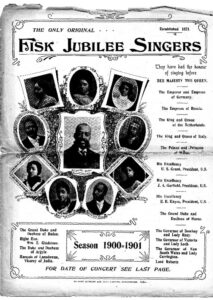
Fig. 9 Loudin’s Fisk Jubilee Singers, Programme Whitehaven 1900-01
The choir members were probably contracted for the full tour. Loudin’s choir members were signed up for the duration, and were then paid at a given rate after every twenty concerts. Lacey’s choir may have been paid in the same way. Their accommodation and transport was provided, presumably out of the half of the funds raised that were designated to the Choir. There is no evidence that the choir were accommodated by the inviting chapels, but it seems that they would book into boarding houses. They had to book their own transport to and from their performances as well, which on at least one occasion failed to turn up!
The ‘Lacey’ Jubilee choir, unsurprisingly, relied heavily for their musical sources on the songs included in the various early editions of ‘The Story of the Jubilee Singers’ published by Hodder & Stoughton from 1876. Unhelpfully, there are very few references in the Cornwall newspapers as to what the Jubilee Singers actually sang, with only three mentioned in total; a rendering of the Lord’s Prayer (No. 100), Steal Away (No. 24) and Angels are Waiting (No. 70), all reported as favourites. Fortunately, more detail is given for their performances elsewhere, in which some fifty titles are mentioned. Of these, twenty-seven were from the Fisk song book, six are recognisable as other traditional African-American spirituals, two were temperance songs, two were camp meeting songs and three more were probably generally well-known. This leaves eleven whose source is unclear. They do not seem to have sung Sankey and Moody hymns, as the first Fisk choirs to Great Britain appear to have done.
It is clear that all members of the choir were fine soloists in their own right, and a usual programme would have a mix of solos and choral pieces, all sung unaccompanied and consistently performed to a very high standard. This is how they were described after performing at Stenalees Wesleyan Chapel in July 1894; ‘Their fresh, strong voices blended harmoniously as they sang with warmth and depth of feeling rarely heard in England’. As their music was obviously novel and new, finding words to describe the music as such, and the feelings evoked, seems to prove rather harder. In the context of the evangelic meetings and services they led, there was also positive feedback. For instance, at the Methodist New Connexion Chapel in St Ives ‘The singing was very good, largely attended, and the quaint camp meeting hymns of the singers’ music appreciated.’ At the United Methodist Free Church in Camborne it was reported that ‘Large audiences have been delighted with their quaint songs and melodious strains…The services on Sunday will not easily be forgotten; they were not only very interesting but full of deep pathos. … the stirring and pleasing melodies … touched all the hearts by their tenderness… Mr Ferrando gave a solo in a splendid base [sic] voice full of power, and this was followed by the sweet and tender voice of Miss Webster in the ‘Ten Virgins – the door was shut’ thus bringing these deeply spiritual services to a close.’
The Choir’s Purpose
This ‘Lacey’ Jubilee Choir saw themselves primarily as evangelists. In newspaper reports from other parts of their tour, their focus, as mentioned earlier, was with young people, the temperance movement and with evangelisation. They were regularly appearing at regional Temperance Events, and are reported as helping setting up ‘Band of Hope’ groups elsewhere on their journey (for instance, at Watchet). They also seemed to be promoting the same kind of work back in America. They had a special mission to smaller communities, often raising funds for village evangelistic projects. At one of the early concerts in Cornwall (Redruth) it appears they were also speaking of the evangelism of Africa. (The first Fisk choirs had also promoted this area of work, as their sponsor, Lord Shaftesbury, had helped found the ‘Missions for Africa’ appeal). The reporter referenced this event in this rather politically unacceptable way for today, but which presumably captured the mood of the moment in 1895:
‘The sound of the melodies and the sight of the singers’ dusky countenances awakened in the audience a feeling of sympathy with the other members of the coloured races who have not yet embraced the Christian religion, and the applause that met the remarks made on the subject during the evening was very hearty.’(11)
What the personal ambitions were, in the long term, of each of these Jubilee Choir members, or what became of them is not yet known. However, there is evidence of what happened to some of the original Fisk or Loudin choir members, which may give us some idea. For some, these choirs were literally their whole life. For instance, Patti Malone died on tour in Omalia, Nebraska in 1897(12) and Frederick Loudin, himself, spent most of his adult life as a member of the choir, and latterly as manager. He eventually suffered a heart attack while on stage here in the UK, and died one year later at home in Ravenna, Ohio, in 1904. Remarkably, a good number of his choir members were able to save enough money to establish themselves back home in America. Some became music teachers; some returned to Fisk University as music lecturers or coaches; some established their own touring choirs. Others made life-changing connections while on tour and took advantage of them – either to leave the group at that point, or to take up offers or opportunities elsewhere at a later date. For instance, one of the original Fisk male soloists (Isaac P Dickerson) left the choir to study theology in Edinburgh, and eventually became a speaker for the National Temperance Movement of Great Britain. (It is hard to think that with both having such deep involvement in the national temperance scene, the paths of William Lacey and Isaac Dickerson never crossed. Dickerson was still touring the UK at the time that the Lacey Choir was in Cornwall). Dickerson took up a pastoral role at St Paul’s Mission, Plumstead, during the last six years of his life, and died there in 1900. Another male soloist, Robert Williams, seems to have left Loudin’s choir in New Zealand around 1888, to train to become a practising lawyer, before being appointed as the Mayor of Onslow in 1903.
The Impact of the Choir
It is now increasingly recognised that the early Fisk Choirs were instrumental in introducing black music (in tailored form for white audiences) not just to the UK, but to Europe and beyond for the first time – and in particular, the music that was born out of the experience of enslavement.
However, the study of their impact on the music of Cornwall is still very much in its infancy. The first Fisk Choirs took the world by storm and, although it isn’t thought they toured Cornwall as such, they did reach Devon. It is hard to imagine, therefore, that their music didn’t then travel over the Tamar. The story of the original Jubilee Singers, published by Hodder & Stoughton, sold in many thousands in the different editions, and initially included one hundred and fourteen musical scores. It seems unlikely, therefore, that this ‘pop music’ of the day didn’t become well known and sung, long before the Lacey Jubilee Choir arrived in Cornwall. For instance, ‘Lily of the Valley’ is still sung in pubs in Cornwall to this day, but it is unclear as to whether it came to Cornwall in the 1870s or 1880s (because of the early Fisk Choir visits to Great Britain) or whether it arrived specifically with the later Lacey Choir in 1894. They were often heralded prior to their arrival because of the fame of the choirs that went before them and, of course, they came using the same musical sources. There is evidence that the music the Lacey Jubilee Choir sang ‘caught on’ in the immediate aftermath of their visit, especially with the young. For instance, the Stroud Primitive Methodist Girls Club learnt and performed the Jubilee Choir’s music for Christmas, 1895, not long after the choir had performed there. In July 1902, several years after their tour of Cornwall, the young people of Mylor Youth Club were treated to a talk about the history of Fisk University and then enjoyed singing items from the Fisk repertoire. (13)
So far, almost all the references found for this choir in Cornwall are from newspaper reports. No programmes, fliers, photos or any other item have been found that relate to this one-year tour – other than the random scrapbook entry by William Tremewan of Perranporth in October 1894. No written chapel record of their visit has yet come to light either – and no family anecdotes. It is quite extraordinary that this event, which was clearly remarkable, is absent from the communal memory. Why have they disappeared from the public consciousness?
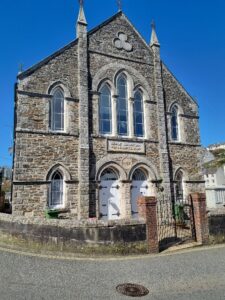
Fig. 10 Mevagissey Bible Christian Chapel 2025
That said, they didn’t quite disappear entirely. Where did the frontispiece photo of the 1882 Fisk Choir (that turned up in an antiques unit in Hayle in 2021) come from? Who bought the book it was in, and when? Did it date from the Lacey choir visit in 1895 or earlier? Where has it been ever since? Did anyone ever sing the music it contained? Then at some point, who decided the photo was worth keeping – but not the book?
In addition, an even more important piece of evidence survives, hidden in plain sight, in Mevagissey. You will need to locate the old Bible Christian Chapel, almost opposite the current Methodist Church in Chapel Square and now converted into flats (fig. 10). If you peer through the railings you will see a foundation stone to the left of the old main entrance into the chapel. It is tricky, but in the right light it reads ‘Jubilee Choir Stone laid by Miss Webster July 2nd 1894’ (fig. 11).
Lacey’s Jubilee Choir, on hearing the news that the original Bible Christian Chapel had burned down in Mevagissey on 27th July 1894, promised that they would give all proceeds of concert in August 1894 towards the costs of building a new chapel. They then subsequently sang at three other concerts in Cornwall, to raise funds. It is not known how much they raised towards this new chapel altogether – but it was enough for them to be asked back to the laying of the foundation stones, one year later. They not only sang at the service, but they were invited to lay one of the foundation stones on that day. Even more remarkable is that it is one of the two most noticeable on the front of the building, and that it was laid by Fisk Jubilee musical director, Elizabeth Webster. (14)
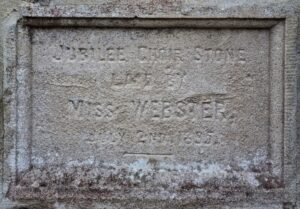
Fig. 11 Foundation Stone at Mevagissey Bible Christian Chapel laid by Fisk Jubilee Choir 1895
The story of the ‘Lacey’ Fisk Jubilee Choir is extraordinary in so many ways. It is extraordinary that these tours of about seven years seem to have become the norm for these various Fisk Choirs. It is extraordinary that they not only made these demanding and dangerous journeys, but they had a distinct sense of purpose; in this case to promote temperance (especially to young people) and evangelise the towns and villages of Britain. They also brought their direct experiences of slavery. With this they brought their extraordinary music, born out of that struggle. It is also extraordinary that these events, transformative and special as they obviously were, seem to have been wiped from the memory or consciousness, not just of the Cornish community – but throughout Britain and Ireland; the Fisk Jubilee Choirs just seem to generally have been forgotten.
Then this ‘Lacey Choir’ story, in particular, is a story hardly told at all. There are still so many unknowns about this Jubilee Choir. How did they form a choir in the first place? Where did they really come from? What was their connection with Fisk (if there was one at all)? Where does William Lacey fit in? Was he also the author of the various ‘temperance’ readers and papers of the 1880s? Where else did the Jubilee Choir tour in Cornwall? Where did they stay while here? Were funds really being sent back to the southern states for projects there? Or to Africa? And then were they able to secure their own futures? What happened to them after they returned home?
There is also a whole series of unknowns about what this all meant for Cornwall. How did people really respond to this choir and their mission? How can we begin to measure the true impact of their visit to Cornwall? How did it change peoples’ understanding of the impact of slavery? How did it change perceptions of diversity? How did their songs change the music of Cornwall? Very importantly, why has the story almost been lost?
There still is so much more to be discovered about this amazing visit.
Footnotes
(1) William Tremewan’s Scrapbook: Perranzabuloe accession number PZBFM:2014.25.
(2) This is now held in the Perranzabuloe Museum: accession number PZBFM:2021.128
(3) The American Missionary Society (pro-emancipation) had been set up in 1846 and sustained missions in Jamaica and West Africa, as well as America. After emancipation it began training those who had been enslaved to become ministers and teachers, not just to appoint its graduates to schools in the southern states, but also as missionaries to Africa. In addition to the Fisk School, the AMA founded colleges in Beara, Kentucky; Hampton, Virginia; Atlanta, Georgia; Talladega, Alabama; Tougaloo, Mississippi and New Orleans, Louisiana.
(4) Marsh, J.B.T. (1876) The Story of the Jubilee Singers With Their Songs Hodder & Stoughton p. 6.
(5) Ward, Andrew (2000) Dark Midnight When I Rise Harper Collins p. 79
(6) Ward (2000) p. 193.
(7) Website address (27.05.2026): Fisk%20Choir/Fisk%20Research/Other%20Jubilee%20Choir%20
and%20Presenters/Jubilee%20Choirs%20web_table_4.4.html
(8) East & South Devon Advertiser 29th Jan 1896 p. 8 col. B.
(9) Western Times 31st Mar 1896 p. 5 col. G.
(10) Western Times 16th Nov 1893 p. 2 Col. D.
(11) Royal Cornwall Gazette 23rd August 1894 p. 5 col. C.
(12) Ward (2000) p. 396.
(13) Stroud News & Gloucestershire Advertiser 20th Dec 1895 p. 4; Falmouth Packet 12th July 1902 p. 5.
(14) Cornubian 10th August 1894 p. 5 col E.
Further Reading:
Broughton, Viv (1996) Too Close to Heaven Midnight Books
Marsh, J.B.T. (1876) The Story of the Jubilee Singers With Their Songs Hodder & Stoughton.
Marsh, J.B.T., Loudin, F. J. (1903) The Story of the Jubilee Singers With Their Songs with Supplement Hodder & Stoughton.
Ward, Andrew (2000) Dark Midnight When I Rise Harper Collins
Lynne Mayers has enjoyed varied careers in tropical agriculture in the Caribbean and also as a Methodist minister appointed to inner-city circuits in the UK. On having to take early retirement she has spent much time investigating the role of women and girls in the metal mining industries, not just in the south west but also throughout the United Kingdom and Ireland. Her Cornish forebears (men, women and children) worked at the tin, lead, copper mines of the parish of Perranzabuloe, and then scattered across the globe to Australia, USA, Sardinia, Brazil and the lead mines of Cumbria as the mines closed. Her most recent efforts have been in researching this little-known history of the Fisk Jubilee Choirs visits to Britain, triggered by their appearance at the Wesleyan Chapel in Perranporth in October 1894.

A truly fascinating and incredibly well researched story (against the odds). Thank you for the work and sharing of the story. Loved the bit about raising money for Mevagissey chapel. I can king begin to imagine how hard life must have been for the original people made slaves. I hope somehow those who had the fortune to get involved in the various choirs found considerable joy, friendship and support to be able to lead full and pleasant lives on return to the US or elsewhere.
As an aside my late father was proud to sing Shenandoah as a youngster growing up in Millbrook in Cornwall and to me once as a kid in the car! I have no idea of the history of the song but the style of singing perhaps might match. Or not:-). Best regards.