
by John Webb
This history of the current Toronto Cornish Association is from the Association’s February 2026 newsletter. It is included here as a part of Cornish Story’s Global Kernow.
In 2024, as the Toronto Cornish Association marked its 30th anniversary, it felt like the right moment to look back –particularly to those formative first ten years when habits were established, friendships formed, and the character of the Association took shape. This is the story of how the present-day Toronto Cornish Association (TCA) began, how it grew, and why it still matters.
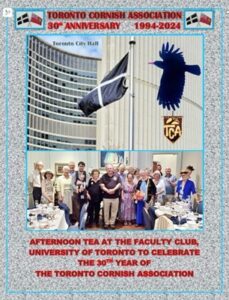
The main sources for the article are the binders of newsletters, minutes, and attachments that longtime members Len and Carol Snell filed with dedication over many years, along with personal recollections and a bit of online research. Member Jim Dagg supplied the perfect starting point by providing a wonderful cover page and then leaving the rest to those of us with long memories.
It is also worth remembering that ours is the third iteration of a Toronto Cornish Association. Earlier societies were founded in 1873 and again in 1904. Both flourished in their time before fading, as so many diaspora organisations did. What began in 1994 was not something entirely new, but a conscious revival, rooted in history, yet shaped by a changing world.
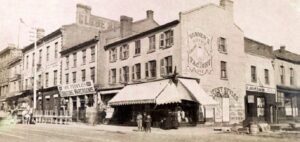
The Globe newspaper reported on the 1873 TCA meeting held in the Yonge Steet, Toronto, Whale Hotel, owned by Cornishman Dennis Whale.
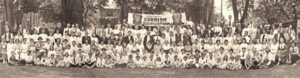
The 1921 TCA picnic at Montebello Park in St Catharines, Ontario.
The TCA did not emerge in isolation. Across North America, Cornish identity was undergoing renewal. Earlier Cornish societies had grown out of mining communities in places such as Grass Valley, Mineral Point, Butte, and Bruce Mines. These organisations celebrated mining heritage, Methodism, and close-knit working life. But by the mid-20th century, assimilation and generational change led many of them to decline.
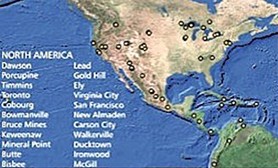
Map from Cousin Jacks World
From the 1970s onward, however, something shifted. Genealogy flourished. Multiculturalism gained ground, especially in Canada. Communication became easier, and in Cornwall itself, there was a cultural revival.
The founding of the Cornwall Family History Society in 1976 preserved vital genealogical records at a time when much might have been lost. In 1982, the Cornish American Heritage Society (CAHS) was established, creating an umbrella network of Cornish groups across the United States and Canada and launching the biennial Gatherings of Cornish Cousins. Cornishness was no longer only something inherited. It was something that could be rediscovered, reclaimed, and celebrated – and in Canada’s multicultural framework, actively encouraged.
Two individuals particularly influenced this renewed transatlantic spirit. Dorothy Sweet, a founder of both CFHS and CAHS, tirelessly strengthened links between Cornwall and its diaspora. Her work earned her recognition as a Bard of Gorsedh Kernow. Likewise, Howard Curnow, author of Cornwall My Country, championed Cornish identity and reminded diaspora groups that their relationship with Cornwall must be a living, two-way exchange.
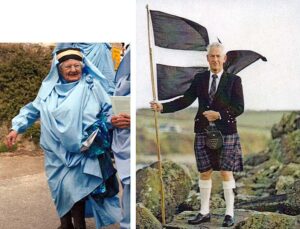
Dorothy Sweet and Howard Curnow
By the early 1990s, the conditions were right. What remained was for someone to act. That catalyst was John Tyacke. Drawing on contacts through the Ontario Genealogical Society and the Cornwall Family History Society, John identified 53 individuals in the Toronto area with Cornish interests and sent out invitations. On March 19th, 1994, twenty-two people gathered at the Royal York Hotel. The name chosen – Toronto Cornish Association – deliberately echoed earlier societies. This was a revival with intent.
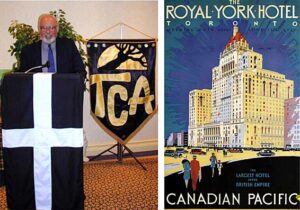
John Tyacke
19th March 1994 · Royal York Hotel · Toronto
Among those present at that first meeting were Rosalie Armstrong of Montreal, then President of the CAHS, and historian Margaret James-Korany, whose database of Cornish immigration to Canada would become a lasting research resource.
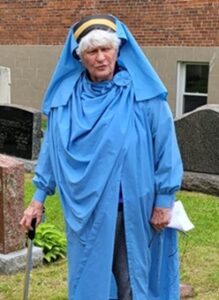
Rosalie Armstrong
Another early connection came, fittingly, with refreshment. Through John Tyacke’s initiative, contact was made with brewer John Sleeman, proud of his Cornish roots. Sleeman beer soon became a regular feature at meetings, “gratefully consumed with relish,” and John Sleeman was made an Honorary Life Member.

An unexpected ally – John Sleeman
It was, in many ways, a perfectly Cornish beginning: genealogy, generosity – and beer.
Within months, a constitution and by-laws were drafted, drawing inspiration from other Cornish societies. An executive was elected. Meetings were held monthly, often in members’ homes. Genealogy and family history – especially members’ own families – were central from the outset, alongside a broader commitment to studying and promoting all things Cornish. But it was never all serious.
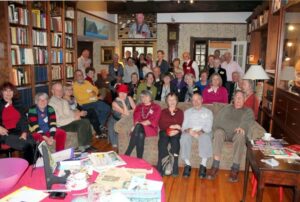
Building an organization
Christmas parties began in the first year. Summer picnics followed. Musical evenings ended with spirited renditions of Trelawny. Raffles raised funds to purchase Cornish-related books for the Toronto Public Library. From the beginning, the TCA balanced scholarship with sociability – stimulating and informative, yet relaxing and entertaining at the same time. One inspired early decision was to record living memory. Unlike many American Cornish societies, whose members were largely descended from 19th-century emigrants, many early TCA members were first-generation Cornish.
Pauline Duinker encouraged members to share their memories of life in Truro, Port Isaac, Penzance, Lanteglos-by-Fowey, and elsewhere. These were not simply nostalgic recollections. They created continuity across generations and anchored the Association emotionally as well as historically.
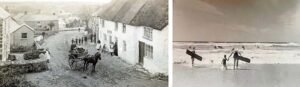
Living memory · Shared stories
In the pre-internet era, genealogy required patience: microfiche, paper indexes, library visits, and shared expertise. Research was communal. Discoveries were celebrated collectively.

Genealogy before the internet
Doing genealogy in the mid-1990s was easier said than done. Research relied on microfiche, paper indexes, and terminology that now sounds almost arcane. Online resources were either limited or non-existent, and patience was a core skill. Who can remember Windows 3.1 and a CD ROM?
The real reward of this work was discovery – not just names and dates, but connections. And the collective effort paid off. Family histories were written, connections uncovered, and in many cases, long-lost branches of families were rediscovered.
One example captures this perfectly. From a single indexed name – such as Captain Joseph Snell – entire family stories emerged, stretching from Cornwall to Michigan and beyond. Genealogy became a shared adventure rather than a solitary pursuit.
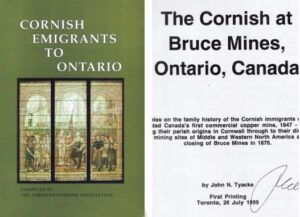
The first decade also produced substantial published work. In 1997, Cornish Emigrants to Ontario was released, fulfilling one of the Association’s founding objectives. The book sold out and required a second printing. In 1999, John completed The Cornish at Bruce Mines, Ontario, Canada, tracing the miners who established Canada’s first commercial copper mine and following their dispersal after its closure in 1876. The work preserved family histories and contributed to the broader recognition of Cornish mining heritage.
From the beginning, the TCA had agreed that it would study and promote all things Cornish, not just family history. Every meeting included a Cornish story. Topics ranged widely: smugglers, Methodism, ‘wrassling,’ shipbuilding, railways, saints and slate, and even Victorian funeral practices. If it happened in Cornwall, it was fair game. Some were scholarly, some delightfully eccentric, and all reflected deep curiosity about Cornwall and its people.
One member, while studying for her PhD, even presented her research on The Cult of St Petroc in Cornwall and Brittany – a reminder that the TCA could comfortably span both kitchen-table history and academic research.
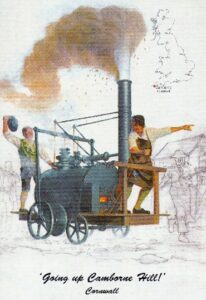
And with 2001 being the 200th anniversary of the first journey of Trevithick’s Puffin Devil, there was another story to be told.
Beyond publications and research, the TCA supported heritage initiatives in Cornwall and Canada alike – contributing to the Tregellas Tapestries, supporting mining heritage recognition, assisting in the return of the Lady Agnes figurehead to St Agnes, and participating in commemorations of the 1497 Cornish Rebellion.
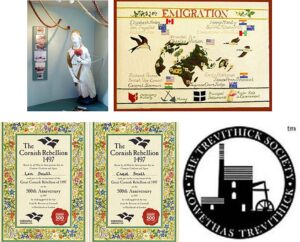
Commemorative and heritage projects
These were not symbolic gestures, but practical expressions of care for Cornish heritage.
The TCA also became visible in civic life. During the 1995 ‘Turbot War,’ Cornish fishermen flew the Canadian flag in solidarity with Canada. In response, St Piran’s flag was raised above Toronto City Hall – an act supported by City Councillor David and Mayor Barbara Hall. Since then, the Cornish flag has flown annually on St Piran’s Day, a powerful symbol of Cornish presence in Canada.
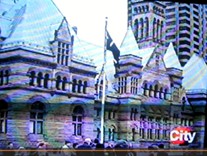
Our flag flew at City Hall
Members attended Celtic festivals, hosted information tables, participated in Gatherings of Cornish Cousins, and travelled to Cornwall to reinforce living ties. In 2003, despite the challenges of SARS, the TCA hosted the CAHS Gathering in Bowmanville.
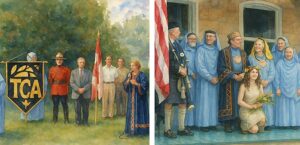
CAHS Gathering of Cornish Cousins. Bowmanville 2003
In 2004, the 1994 TCA celebrated its 10th anniversary – coinciding with the centenary of the 1904 Toronto Cornish Association. A celebratory event at the Novotel featured guests including Bards Rosalie Armstrong and Peter Julian. There was every reason for pride.
In just ten years, the Association had built structure, accumulated full binders of minutes and newsletters and scholarly articles, produced respected publications, supported heritage initiatives, and nurtured lasting friendships. Most importantly, it had become a reservoir of Cornishness.
The TCA did not create Cornish identity in Ontario. It gave it a home, a voice, and a memory. It brought people together, encouraged learning, preserved stories, and shaped lives. And that is why this story matters – not simply as history, but as lived experience.
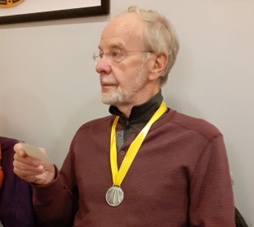
John Webb
While born in London, John’s family folklore included tales of a Cornish coastguard as an ancestor. Often regaled but never explained. It was only after emigrating to Canada, meeting with members of the TCA and taking the time to carry out the research, that the story was confirmed. John continued as an active member of the TCA and in September 2025, had the honour of being admitted into the College of Cornish Bards for promoting Cornish Identity in Canada.
