
William Quintrell (1861-1920)
By Ernie Parsons
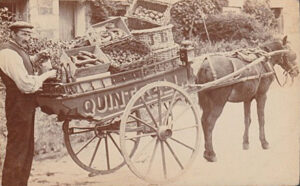
This is the first in a short series of articles focusing on some 19th century Cornish poets from labouring-class backgrounds. Largely now forgotten, they are nevertheless an important part of Cornish culture, overcoming their limited education to write poetry about the events and feelings affecting most Cornish people of their time. Only a brief selection of each poet’s work can be given here but a more extensive anthology is being planned.
‘Will’ Quintrell, the son of a railway labourer and tin miner, received only a rudimentary education and worked variously as a tin miner, grocer, auxiliary postman, fruiterer, china dealer and picture framer! He lived in Camborne all his life where he became well-known as a local poet, Methodist preacher, temperance worker and reciter of Cornish dialect stories.
All of Quintrell’s forty-one extant poems, written for his own enjoyment, were published in his 1912 collection, Original Cornish Poems. They range from the comic to the morally uplifting.
Religion, a major issue in his contemporary Cornwall, became important to Quintrell after he joined the Tuckingmill Wesleyan Men’s Brotherhood in 1909, where he rediscovered his inspiration declaring, ‘Life’s a journey, onward brother, / Let us seek to help another’. The collection’s final poem, The Lost Kitten, further extends this compassion to animals. Another pressing social concern to him, the ‘lesson of temperance,’ is illustrated in The Orange Boy, the story of Joe, ‘a poor drunkard’s child’. Such poems, deriving from his faith, depict his positive attitude to life, although at times they lead to a sentimental naiveté.
Quintrell’s most enduring poems, though, arise less from moral illustration than from the observation and vibrant description of local incidents such as the christening of Camborne’s new steam fire engine, ‘Trelawny’, in July 1909 or the joyful celebrations of Camborne’s band. Renowned for his recitations, Quintrell also wrote poetry in the Cornish dialect, a neglected field of Cornish culture, one sadly ignored within the Cornish Revival. Disappointingly, only two of these poems now survive: the highly entertaining Camborne Feast, an account of Maary Ann’s ride on the new street cars, and Maary Ann’s visit to a Knife and Foark Tay. (If any reader has a copy of his popular Puggis White Gate, please let me know.)
In contrast, Quintrell’s restrained accounts of local shipwrecks depict the differing impacts of such tragedies: the loss of lives and the courage of would-be rescuers. The Mess-Room Laddie focuses on the tragic fate of a boy, from a ‘Home of the Waif and Stray’, who drowns on his first voyage whilst The Manacle recounts the heroic efforts of the Pourthoustock lifeboat crew. The violence of nature at sea is replicated on land in The Blizzard, where a series of action participles vividly brings that 1891 event to life. Usually, though, nature for Quintrell led him to quiet reflection, particularly upon flowers like the violet, ‘Nature’s obscure creeping plant,’ which to him became a symbol of humility.
Quintrell used a wide range of metrical forms though his spontaneous verse may occasionally lead to clumsy syntax. Whilst making no claims to poetic greatness, his work deserves recognition for skilfully observing and presenting life in the Camborne of his time. It offers the optimism and compassion of an unpretentious man of humble origins who sought to entertain and help others, suggesting,
“Let’s learn from life’s experience
There’s better things in store…
Go forward man, and sing.”
A short selection of Quintrell’s poems
Camborne Feast. Mary Ann’s Opinion of the New Street Cars.
(In the Cornish Dialect).
Tes Camburn Faist, says I to Jan,
Shure as my naame es Maary Ann,
I’m goin’ to have a ride.
“Electric Cars” are goin’ to run
The Booy’s and Maidens will have fun
For this es Faissen Tide.
Now put’es on thy Sunday best,
’Tes Faissen Monday weth the rest,
Its Maary Ann’s Birthday.
We’ll mount tha Car, we’ll have a ride,
I’ll take my seaat close by thy side,
’Tes Tuppence all the way.
And when we git tha ‘tother end,
I tell tha Jan I do intend
To look Redruth about,
For this es our Rud Letter day
To ride upon tha “New Tramway’’
Our Faissen Monday out.
Thy gloves and silk hat, thee must weaar,
I want for us now to appeaar
Like “Tram Cars,” “Up to Daate”
And I’ll put on my silken gown
As we are goin’ to Redruth Town,
Maake haaste, thee wust be laate.
Look heer’s tha Car come Maary Ann,
Thee’s miss her shure’s my name es Jan,
‘Twill lev us both behind.
Thee’rt like the wemmen never hurry
Until tha laast, then hurry, scurry
To sarch and never find.
Hould up thy hand, “good maister stay’
We want to ride thes Faissen day
In your Electric Car.
Now Jan, git up, don’t mind tha rush,
Go back you booys, why dost a’ push
Like Sold-yers goin’ to War,
’Tes like a palace iss plaise sure
I could ride heer, this day and more.
Ef Jan he war so will-en.
Some con trass this to slow goin’ hoss
With haaf tha truble, haaf tha coss,
I’d raather pay a shellen.
There is Music
Suggested from a trip from Camborne to Falmouth, via Truro, then down the River Fal with the Camborne Town (land, a few days after their having won the first prize at the Band Contest, held at St. Austell, 1909.
There is music at the station,
Mid the busy rolling train;
’Tis the bandsmen’s host of trippers,
Listen to their merry strain.
They are bent on wholesome pleasure,
Full of life and cheery sway,
Falmouth, is their destination,
They are out for holiday.
There is music in the “City,”
From the street and top-most spire
Comes the sounds of busy ringing,
Workmen at their daily tire.
Soon we meet the tradesmen smiling
In a bright congenial way,
Shaking hands and hearty greeting.
Speaks the order of the day.
There is music with the “Steamers”
And the smaller craftsmen true,
Waiting ready at their calling
For a trip along the blue.
Shrieking whistle, Captain’s token,
(Often heard along the quay),
Rousing up the latest comer,
Who, too often, has his plea.
There is music on the river,
’Mid the splashing whitened foam,
As we steam the winding channel
With our Captain safe at home;
He has gone the way before us,
Knows the path from stem to stake;
At the “wheel” his constant duty,
On the “Look-out,” lies awake.
There is music on the river
As we sail the “Cornish Rhine,”
Graceful course of living beauty
Where the silvery wavelets shine.
Trees, arrayed in fruitful verdure,
Hangs aloft their leafy green,
Forming up an outer border,
So enchanting is the scene.
Song, entitled “Camborne’s New Puffer.”
Tune. “Shall Trelawny die?
Written in honour of the annual meeting of the Cornish district of the National Fire Brigades Union and the christening of the new steam lire engine, “Trelawny,” for the Camborne Fire Brigade, by Miss Patience Mary Bassett, of Tehidy, at Camborne, July 6th, 1909.
Why march brigades in uniform,
With brazen helmets gay?
Why hang the flags across the streets,
Why make such a display?
They stand, the Council, on the steps,
And hear the chairman say:
“We welcome you our Cornish sons
On this your festive day.”
Chorus:
We’ll honour then our Cornish Sons,
Who wait at bugle’s call,
With engine, hose, and Cornish grit,
Our motto – “One and All.”
What means these shouts in yonder hall,
Say why such mirth and cheer?
A toast of health, ’tis luncheon time,
It is their native sphere.
Hark! how the music sweetly blends,
Where honour it is due,
Long live our gallant Cornishmen,
‘Neath white, and red, and blue.
Why halt the crowds in Market Place?
Why such commotion pray?
The “Puffer” comes with burnished hue,
With prancing horses grey.
What means the sound of broken glass.
While smoky columns play?
Miss Patience Mary christens her
“Trelawny” – Hip! Hurrah!
The whistle sounds now sharp and shrill,
While willing men stand by,
And by their captain led they cheer
And watch the water fly.
All hail! to Camborne’s “puffer” new,
May she extol her name,
Like those of yore, who stood the test –
Trelawny’s Cornish fame.
Why load the brakes with men of fire,
Whilst sounding bugle’s blow?
Tehidy Park, their destined place,
You shall the reason know.
By invitation of the squire,
“Trelawny” leads the way,
With dashing greys, she’s to the fore
On her Red-Letter Day.
Our pioneers, they did their best,
To show the coming plan,
From Camborne Town to Tuckingmill.
Their locomotive ran,
From Tyack’s shop, to Beacon Hill,
With passengers a few,
Folks called it then some ferny names –
Trevithick’s “puffer” new.’
And now “Trelawny’s” safely housed,
Complete in her attire,
And when the duty call is heard
She’s ready for the fire.
Here’s health to N.F.B.U. strong,
From Tamar to Land’s End,
And when you hear the great “fire” cry,
Cornwall on you depend.
Violet
Suggested from a walk among the draped hedges, of Carwinnin and the woody glades of Pendarves near Camborne.
Thy native home the woodland glade,
Or ’neath the hedgerow’s quiet shade;
Like daisy, primrose, cuckoo’s ring,
Bright harbingers of coming spring –
Violet.
I sought thee first with curious eye,
Where blithe birds sing and swallows fly;
Thy simple, unassuming dress,
Fit emblem of sweet faithfulness –
Violet.
Through old fields’ way by “Trevool Farm,”
Midst hyacinth and floweret charm,
I’ll ne’er forget thy blushing smile:
Our tripling place “Boteda Stile” –
Violet.
Thy freshened, tinted, modest face,
A picture true of favour’d grace;
Whilst resting ’neath a willow tree
I’ll hang my harp and think of thee –
Violet.
Thy dark green leaf of heart-like shape
With dented edge the woods doth drape,
Deep purple flower, fragrant, small,
I’ll pour on thee my soul, my all –
Violet.
From Nature’s obscure creeping plant,
Midst common walks, and void of cant,
Pray let me ever learn from thee
That lesson great: humility –
Violet.
Outside versus Inside
Suggested from the Monthly Brotherhood Meeting at Tuckingmill, May 2nd, 1909.
Topic:— Music and Religion.
I stood by a flowing river,
And thought of the days of yore,
Those hours of mirth and music,
They came to me o’er and o’er.
My harp, it hung on the willows,
My tongue had refused to sing,
My soul was dwelling in bondage,
My voice it had lost its ring.
I stood on a village pavement,
And saw’ the crowds pass by,
And enter an “historic building,’’
I asked the reason why.
One spoke of a “monthly meeting,”
And told of a Brotherhood band,
He said, “You are welcome, brother,”
And offered a neighbourly hand.
I passed through an open doorway,
And was met with a friendly smile,
And was placed in a seat of comfort,
By one of the rank and file.
I sat ’midst a sea of faces,
Familiar ones, and new,
Soon I thought of the joy and gladness,
Of Brotherhood so true.
They sang a song of “Home Love,”
’Twas sweet as the flowers in May,
I thought of the old village homestead,
And the wanton lad astray,
I listen’d to the President’s story,
Religion and music, the theme,
I watched the magnetic flashes,
Which from his countenance beamed.
Then came a harpist, a-harping,
I thought of the harp of my life,
No place like my favourite “Zion,”
Forgetting the “Babylon” strife,
The music was sweet and enchanting,
I felt like a prisoner free.
Fingers, unseen touch my heart strings,
That music was heaven to me.
I took my harp from the willows,
My tongue began to sing,
My soul was free from bondage,
My voice had caught its ring.
I stood in that crowded building,
And thanked the God above,
For that gentle hand that grasped me,
And the Brotherhood of Love.
Brotherhood in Action.
A Cornish Miner and the “Shay.”
“Loan donkey shay?” said a miner one day,
As he called at the house of another;
“Pray heed my request, I’m doing my best,
I’ve found in the hedge a poor brother.
He’s brow-beaten and worn, bleeding and torn.
The Levite and Priest have gone by;
Love’s lotion I’ve made, I’ve rendered first aid,
And to practice home missions I’ll try.”
He replied: “By the way, I’ve only a shay,
The donkey in harness has died.”
“Then pray harness me,” said the miner so free –
Such zeal could not well be denied.
’Twas his opportune way, he borrowed the shay,
And did the rough work for another;
For fully two miles, with neighbourly smiles,
Up hill and down dale for a brother.
With Samaritan fame he played a good game,
And reached the Home Inn with all speed,
Bestowing his share for the hostess to care
And cater for brotherly need.
It was Mercy and Love, inspired from above,
Such deeds immortal ne’er die,
They live and they bloom, giving freshness in gloom,
Which reaches the Master on high.
There’s a lesson for all: Obey duty’s call
As we travel life’s Jericho way;
Love’s main spring in motion, bandage and lotion,
Let us the true brotherhood play.
’Midst dark bandit raid, equipped with first aid,
Let us halt if it causes delay;
For another to feel, not to wound but to heal,
And to labour if nought but a shay.
The Manacles.
The Wreck of the ‘Mohegan.’
Have you heard of the Manacles, Sir,
That spot that the Mariners dread,
By which many gallant sailors
Have found a watery bed?
I mean that long reef of rocks, sir,
That lies on the Southern side,
Just six miles west of Falmouth,
That is washed by the ebbing tide.
They are only a mile from the mainland,
Just a mile – Yes, sir, that’s all;
They stand just off Porthoustock,
That Fishing Village small.
And many a time the “Charlotte,”
Porthoustock’s life-boat brave,
Has gone through storm and danger,
To rescue and to save.
How oft in dark and tempest,
When storms have been severe,
Has mariners dreaded reef sir,
And thought of danger near.
But down at end of Rocks sir,
There floats a buoy with bell,
Placed there a hopeful message,
To sound the Manacles knell.
I will tell you a piteous story,
That happ’d on this dangerous reef;
Of a noble vessel that foundered,
’Mid sorrow, and sadness, and grief,
Her name it was “Mohegan,”
A steamship two years old,
Her Captain’s name was “Griffiths,”
Experienced, stout, and bold.
It was her second voyage,
Owned by the A.T.C.,
Used as an Atlantic Liner,
To sail across the sea.
Eight thousand was her tonnage,
A transport steamer new;
With passengers full fifty-three,
One hundred eight her crew.
Bound from the “Port of London,”
“New York,” her destined place,
She. left the Thames behind her,
As brightly shone each face.
Came down the Channel steaming,
All things were jolly and bright;
They saw the Eddystone grandly,
’Mid fading, evening light.
The night was clear and starlit,
The sea rolled as before;
The ship was gliding sweetly,
With Captain to the fore.
They thought ’ere many hours,
They would the Channel leave,
And reach the sweeping ocean,
No danger did conceive.
The gong rang out for dinner.
Which in Saloon was spread;
They ate and drank light-hearted,
Nor thought of death or dread.
Rut while they sat at table,
The ship was going to grief,
For straightway she was steering
Right on the dreaded Reef.
Then came the fatal moment,
In spite of Rocket light;
Of grating, crashing, tearing,
As each one stood affright.
Then was a fearful rushing,
On deck it told its tale;
They saw their doom and danger.
While each one’s cheek was pale.
Their ship began to founder,
She throbbed from stern to stern;
The waters filled her cabin,
As each one’s heart did yearn.
Just a few moments later.
Her engines ceased to go;
Electric lights were darkened,
As she reeled to and fro.
The boats were quickly lowered,
The Captain’s voice rang clear;
The ladies first and children,
We have no time to spare.
Then came a fearful lurching,
Likewise a dreaded shock;
And then she sank all broken.
Beside the jagged rock.
The sea was quickly peopled,
Amidst the watery roar;
Whose cries was heard distinctly,
Some four miles from the shore.
Some clung to bits of wreckage,
At floating spars they caught;
Whilst others climbed the rigging,
Or, to the funnel got.
At last the Life-boat proudly.
The “Charlotte’s” crew so brave;
Did venture from “Porthoustock,”
To pull abreast the wave.
The waves were hard to battle,
But still they sought to dare;
Denying self for others,
Their fellows want to share.
‘The scene it was appalling,
Around this dreaded reef;
With boats and mass of wreckage,
With cries that sought relief.
Men, Women, Children, struggled,
Their earnest efforts fail;
And from the hideous darkness,
There rose a bitter wail.
They went to work in earnest,
In spite of rock and wave;
And very soon succeeded,
Full twenty souls to save.
And then across the water,
They sought the cove to reach;
And bravely, safely landed
Them on “Porthoustock” beach.
Again they breast the waters,
This self-denying crew;
To reach the broken wreckage,
And saved again a few.
And then the noble housewife,
Flung open wide her door;
To shelter shipwrecked strangers.
Who had been brought ashore.
Oh! how they cheered the Life-boat,
When last survivor came;
All honour to “Porthoustock,”
Men shall revere the name.
Some fifty lives were saved, sir,
From battling with the wave;
Saved in the midst of danger,
By Cornishmen so brave.
How sad indeed the story,
A wreck so near the land;
Her twelve miles out of course sir,
We cannot understand.
But by such steering, madly,
One hundred lives were lost;
Whilst others suffered sorrow,
At such tremendous cost.
May this teach us a lesson,
On life’s great channel we;
To heed the rocks and breakers,
A warning from the sea.
Unless we heed the rudder,
The rocks will bring us grief;
And like this ship, shall perish,
On life’s great rugged reef.

Ernie Parsons
A very (!) mature student, Ernie was awarded an M.Phil. degree in 2024 from the Institute of Cornish Studies for his study of the Helston poet, James Dryden Hosken. Ernie is continuing to research other lesser-known and mainly “labouring- class” Cornish poets of the nineteenth century, and was recently asked to become the Cornwall / Kernow editor for the Catalogue of Labouring Class and Self-Taught Poets c.1700-1900. (www.academia.edu/129855538). He has also researched the nineteenth-century portable theatres of Cornwall.
[1] Introduced in November 1902
[1] Wrecked in October1898 with the loss of 108 lives.
